Lead Compound Stabilizers

Lead stabilizer is widely used in industrial fields, mainly valued for their exceptional thermal stability— a key property making them indispensable in specific polymer processing, especially for manufacturing opaque rigid PVC (Polyvinyl Chloride) products where this core advantage is fully demonstrated. Beyond this superior thermal stability, lead salts also possess good weather resistance, excellent compatibility with PVC resins, and remarkable cost-effectiveness.
|
Product |
Grade |
Application |
Remark |
|
Flake Lead Stabilizer |
TP-01 |
S-PVC |
For PVC profiles,good stability |
|
TP-02 |
S-PVC |
For cable,excellent stability |
|
|
TP-03 |
S-PVC |
UPVC pipes and fittings, high performance |
|
|
TP-04 |
S-PVC |
PVC corrugated pipes |
|
|
TP-05 |
S-PVC |
For PVC board,good stability |
|
|
TP-06 |
S-PVC |
UPVC pipes and fittings, general purpose |
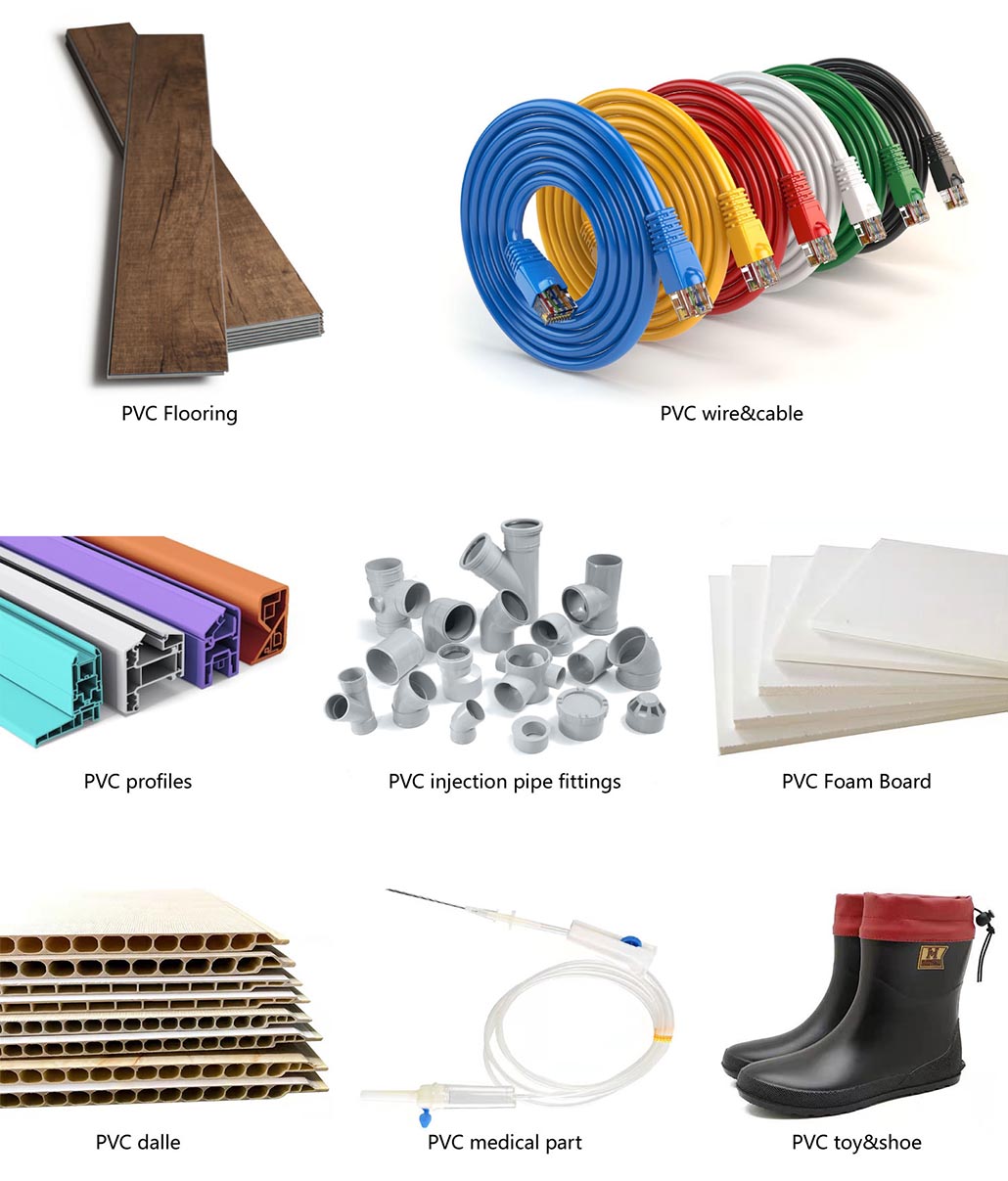
In construction,lead stabilizer is extensively applied in PVC pipes, fittings, door/window profiles, and sheets. These products boast high mechanical strength, corrosion resistance, and long service life, suitable for water supply, drainage, and sewage systems. Door/window profiles, requiring dimensional stability against outdoor temperature changes, rely on lead salts to maintain performance under prolonged sunlight and temperature fluctuations.
In the electrical industry, lead salts stabilize opaque rigid PVC products like cable sheaths, electrical boxes, and switch housings. They withstand thermal stress during processing and use, ensuring no degradation or deformation, thus guaranteeing electrical insulation and structural safety.
Notably, lead stabilizers’ environmental and health impacts have led to stricter regional regulations. Nevertheless, with proper handling, they remain irreplaceable in scenarios prioritizing cost-effectiveness and high thermal stability. Research on lead-free alternatives matching their thermal stability is ongoing, aiming to balance performance, cost, and environmental protection.
Scope of Application