

Soft PVC film and flexible sheet manufacturing demands precise stabilizer selection to guarantee consistent product quality, stable processing performance, and long-term service life. For environmentally friendly, non-toxic soft PVC production, liquid barium zinc (BaZn) and liquid potassium zinc (KZn) stabilizers are the two most widely used additives in modern factories. Even so, many formulation engineers and procurement teams frequently face selection confusion, unsure which option delivers better clarity, softer texture, lower migration, and more reliable heat sealability for specific production scenarios.
Improper stabilizer matching often leads to common production defects, including hazy film surfaces, stiff finished sheets, surface precipitation after long-term storage, and weak heat seal failure during post-processing. These issues not only reduce product yield but also cause unnecessary production losses and customer complaints. This practical guide provides a detailed, side-by-side comparison of liquid BaZn and liquid KZn stabilizers, focusing on core performance indicators tailored to food wrap, decorative film, and general soft PVC sheet applications. Every comparison and suggestion is based on actual PVC processing experience, delivering actionable selection rules for industrial production.
Basic Overview of Liquid BaZn and Liquid KZn Stabilizers
Before diving into performance comparison, it is essential to understand the core positioning and basic characteristics of these two non-toxic liquid stabilizers, as their inherent formula designs determine their applicable scenarios and performance limits.
Liquid barium zinc stabilizer is a high-grade environmentally friendly additive engineered for medium to high-end soft PVC products. It features balanced thermal stability, excellent resin compatibility, and outstanding anti-aging properties. Its stable molecular structure effectively inhibits PVC decomposition during high-temperature processing, maintaining uniform product performance throughout continuous mass production. It is famous for minimizing surface defects and maintaining long-term product stability, making it a preferred option for high-standard PVC finished products.
Liquid potassium zinc stabilizer is a cost-effective, multi-functional stabilizer optimized for daily soft PVC processing. It excels in improving material flexibility and simplifying processing procedures, with unique advantages in low-temperature processing and heat sealing performance. While it targets medium and low-grade soft PVC products, its comprehensive performance fully meets conventional industrial production standards, providing a reliable and budget-friendly solution for mass production of ordinary soft films and sheets.
Core Performance Comparison for Soft PVC Applications
The four most concerned performance indicators for soft PVC film and sheet production are clarity, softness, low migration resistance, and heat sealability. The following targeted comparison helps manufacturers quickly match the right stabilizer according to their product positioning.
• Clarity Performance
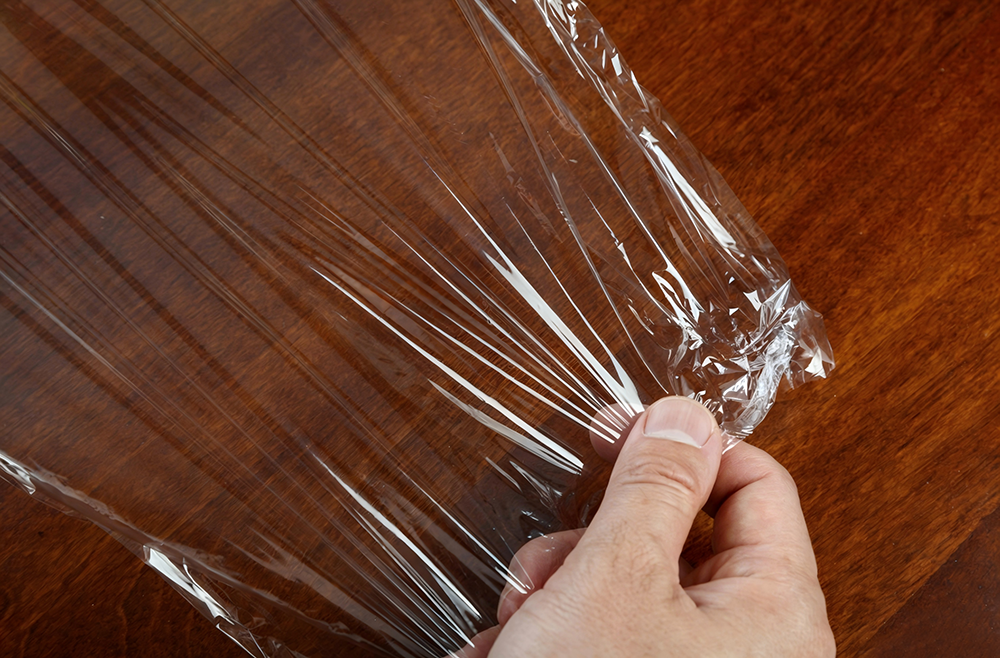
Clarity is the core evaluation standard for decorative PVC film and transparent food wrap. Liquid BaZn stabilizer boasts superior formula compatibility with PVC resin, with no impurity precipitation during high-temperature melting and extrusion. It effectively avoids foggy surfaces, light scattering, and yellowing, maintaining high light transmittance and crystal-clear texture for finished films. In contrast, liquid KZn stabilizer delivers qualified clarity for conventional transparent products but shows slight limitations in ultra-high transparency requirements. It may produce subtle haze in ultra-thin decorative films, failing to meet high-end decorative and food-grade aesthetic standards.
• Softness Performance
Softness directly affects the hand feel and application comfort of flexible PVC sheets and wrapping films. Liquid KZn stabilizer has a more prominent auxiliary plasticizing effect, which can effectively optimize the molecular flexibility of PVC materials. Finished products treated with KZn stabilizer show softer hand feel, better bending resilience, and less rigidity after long-term use. Liquid BaZn stabilizer provides stable and moderate softness that meets basic flexible product requirements, yet it cannot achieve the ultra-soft texture brought by KZn stabilizers, making KZn a better choice for highly flexible soft PVC products.
• Low Migration Performance
Migration precipitation is a fatal defect for soft PVC products, which causes surface frosting, poor adhesion, and shortened service life, especially critical for food-grade packaging materials. Liquid BaZn stabilizer has a compact and stable molecular structure with extremely low migration activity. It will not separate out from the PVC matrix during long-term storage and high-temperature use, fully complying with food safety and high-standard environmental protection requirements. Liquid KZn stabilizer has relatively higher migration risk in extreme environments. It performs stably in conventional indoor products but is not recommended for long-term storage food wrap and high-grade durable decorative films.
• Heat Sealability
Heat sealability determines the post-processing efficiency and finished product qualification rate of PVC packaging films. Liquid KZn stabilizer significantly improves the thermal fusion performance of PVC films, enabling uniform heating, fast bonding, and firm heat seal edges without cracking or air leakage. It adapts to various high-speed heat sealing equipment and greatly improves production efficiency. Liquid BaZn stabilizer provides stable heat sealing performance but requires higher heating temperature and longer pressing time, resulting in slightly lower processing efficiency compared with KZn stabilizers.
Scenario Based Stabilizer Selection Guidance
Combined with the above performance differences, manufacturers can complete accurate stabilizer matching according to their core product lines, avoiding performance waste or insufficient quality:
• For food wrap film, liquid barium zinc stabilizer is the priority choice. Its ultra-low migration, non-toxic safety, and high clarity fully meet food contact grade standards, solving the core pain points of precipitation and safety risks in food packaging.
• For high-end decorative film, liquid BaZn stabilizer is more suitable. It maintains long-term transparent and flawless surface texture, preventing haze and discoloration during long-term use and ensuring stable decorative effects.
• For ordinary soft PVC sheets and daily flexible films, liquid potassium zinc stabilizer offers the best cost performance. Its excellent softness and heat sealability meet daily use demands, while effectively controlling overall production costs for mass production.
Frequently Asked Questions
Q1: Which stabilizer is better for general soft PVC film production, BaZn or KZn?
A: It depends on your product positioning. For high-transparency, food-grade, and long-service-life soft PVC films, liquid BaZn stabilizer is better. For ordinary flexible films that prioritize soft texture and heat sealing efficiency with cost control, liquid KZn stabilizer is the more practical option.
Q2: Will potassium zinc stabilizer reduce the transparency of decorative PVC film?
A: It will not affect the transparency of ordinary decorative films obviously. However, for ultra-thin, high-gloss, and high-transparent decorative PVC films, KZn may cause slight surface haze, so BaZn stabilizer is recommended for high-end decorative scenarios.
Q3: Is liquid barium zinc stabilizer qualified for food-grade PVC wrap production?
A: Yes. Qualified liquid BaZn stabilizers feature non-toxic formula, ultra-low migration, and stable physical and chemical properties, fully meeting international food contact safety standards. It is the mainstream stabilizer for premium food-grade PVC wrapping films.
Q4: Which stabilizer has better anti-migration performance for soft PVC sheets?
A: Liquid barium zinc stabilizer has far better low migration performance. Its stable molecular structure avoids surface precipitation and frosting, making it ideal for soft PVC sheets that require long-term storage and stable surface performance.
Post time: Aug-06-2026