

PVC manufacturing consistently faces two stubborn quality issues that puzzle production engineers and formulators: unexpected product discoloration and surface precipitation. Many factories spend countless hours adjusting processing temperatures, modifying formula ratios, and replacing raw material batches, yet yellowing, hazy surfaces, and white powdery precipitation still occur on finished PVC products. These defects not only ruin product appearance and transparency but also lead to batch inconsistencies, increased scrap rates, and lost business opportunities for high-end customization orders.
Most production teams overlook the core root cause: trace impurities in low-grade PVC stabilizers. While standard stabilizers deliver basic thermal protection during extrusion and molding, residual impurities trigger invisible catalytic degradation reactions that damage PVC molecular structures over time. High-purity PVC stabilizers, including premium CaZn, BaZn, and methyl tin variants, solve these fundamental problems by minimizing impurity content, stabilizing thermal processing, and maintaining long-term color consistency for all types of PVC products.
The Hidden Link Between Stabilizer Impurities and PVC Quality Degradation
Polyvinyl chloride (PVC) features poor inherent thermal stability. Under high-temperature processing conditions required for molding and extrusion, unmodified PVC undergoes molecular chain fracture and thermal decomposition, which naturally causes fading and yellowing. Thermal stabilizers are added to neutralize decomposition triggers and lock in product stability during production and long-term service life.
The key difference between ordinary and high-purity stabilizers lies in residual trace substances. Conventional low-cost stabilizers contain unremoved free acids, heavy metal residues, and organic impurity particles. These microscopic contaminants do not cause visible damage immediately after production. Instead, they act as high-activity catalysts that continuously accelerate PVC thermal degradation during processing and daily use.
This catalytic reaction produces three typical defective phenomena in mass production. First, progressive discoloration, including overall yellowing and local color deviation between production batches. Second, surface precipitation, where unreacted impurity compounds migrate outward to form white powder or hazy films, destroying surface gloss and transparency. Third, accelerated aging failure, making PVC products prone to brittleness and color fading under outdoor light and high-humidity environments. Unlike adjustable processing errors, these impurity-derived defects are persistent and cannot be fixed through post-production treatment.
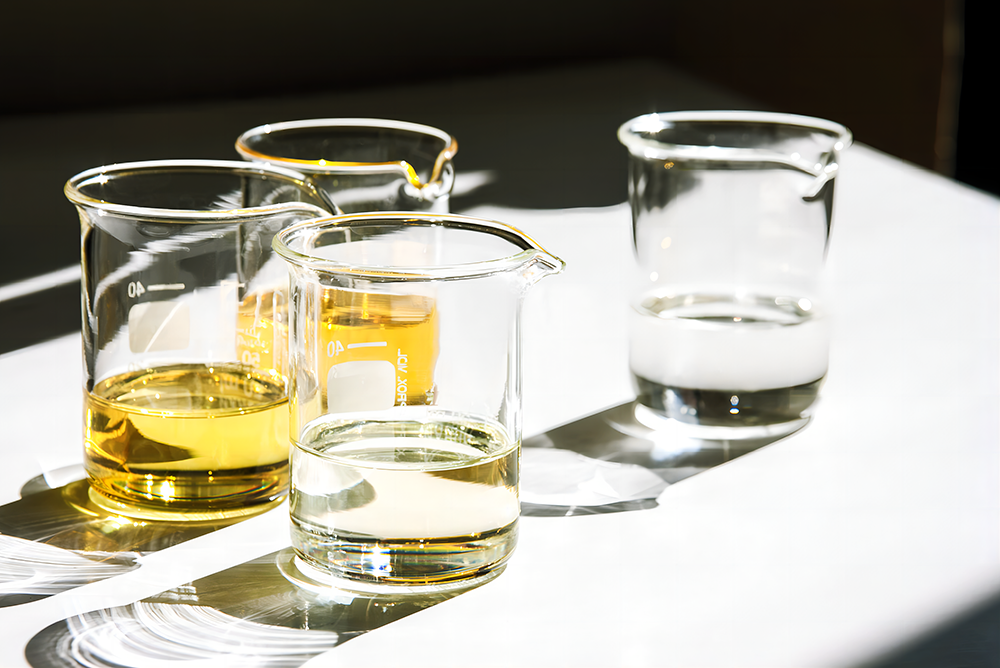
Core Advantages of Three High Purity PVC Stabilizers
Professional PVC formulators prioritize high-purity stabilizers precisely for their ultra-low impurity levels, which eliminate catalytic degradation risks fundamentally. Each type of premium stabilizer features unique performance strengths, matching different production scenarios and quality requirements for customized industrial solutions.
• High-Purity CaZn Stabilizer
High-grade calcium zinc stabilizers adopt refined purification technology to remove heavy metal impurities and harmful residual substances completely. This non-toxic, eco-friendly stabilizer delivers stable thermal protection without causing surface precipitation or color migration. It is the ideal choice for food-contact grade, medical grade, and indoor decorative PVC products. Its ultra-low impurity formula ensures long-term color stability even with long-cycle use, avoiding the subtle yellowing common with ordinary CaZn stabilizers.
• High-Purity BaZn Stabilizer
Premium barium zinc stabilizers feature optimized impurity control formulas tailored for high-temperature and outdoor application scenarios. With excellent heat resistance and anti-aging performance, they effectively suppress catalytic degradation caused by residual impurities under strong ultraviolet radiation and high-temperature environments. Manufacturers widely use high-purity BaZn stabilizers for outdoor PVC profiles, wall panels, and exposed pipe materials, solving long-standing problems of outdoor product powdering and discoloration.
• High-Purity Methyl Tin Stabilizer
Methyl tin stabilizers represent the highest purity level among mainstream PVC stabilizers, with almost zero trace impurities. They completely eliminate molecular level catalytic degradation, delivering outstanding clarity and color retention. This makes them the exclusive choice for high-end transparent PVC products, including transparent pipes, packaging films, and optical-grade PVC materials. No fogging, yellowing, or precipitation occurs even after long-term storage and high-intensity use, ensuring consistent high-end product appearance.
Practical Stabilizer Selection Tips for PVC Manufacturers
Matching high-purity stabilizers to production requirements is the most cost-effective way to reduce defective rates and improve product competitiveness. For ordinary low-demand indoor PVC products, standard stabilizers can meet basic short-term use needs, though subtle quality attenuation may appear after long-term placement.
For all high-end scenarios, upgrading to high-purity stabilizers is a necessary investment. Transparent PVC products, medical and food-grade materials, and precision decorative PVC components require ultra-low impurity environments to guarantee optical performance and safety. Outdoor engineering PVC products must adopt high-purity BaZn stabilizers to resist impurity-induced aging and maintain stable performance in harsh environments.
In actual production, high-purity stabilizers also simplify formula debugging. Their stable pure composition reduces the need for auxiliary additives that compensate for impurity defects, shortening production debugging cycles and lowering overall raw material costs. The reduced scrap rate and improved product consistency further enhance factory production efficiency and market reputation.
Q&A
Q1: Why do low-purity PVC stabilizers trigger discoloration and precipitation?
Low-purity stabilizers contain residual free acids, heavy metals, and organic impurities. These substances act as catalysts to accelerate PVC molecular degradation during high-temperature processing and long-term use, causing irreversible yellowing and color deviation. Meanwhile, unreacted impurities migrate to the product surface, forming visible powdery precipitation and hazy layers.
Q2: What are the key benefits of high-purity CaZn and BaZn stabilizers?
High-purity CaZn stabilizers feature zero heavy metal impurities, eco-friendly performance, and stable color retention, suitable for safe, high-standard PVC products. High-purity BaZn stabilizers provide superior high-temperature and UV resistance, eliminating impurity-caused aging and discoloration for outdoor and high-heat processing scenarios.
Q3: Which stabilizer is best for high-transparency PVC products?
High-purity methyl tin stabilizers are the optimal choice for transparent PVC products. With near-zero impurity content, they completely avoid catalytic degradation and surface fogging, maintaining long-term high transparency, high gloss, and color consistency for premium transparent PVC materials.
Q4: How do impurities affect PVC thermal stability during production?
Stabilizer impurities break the molecular stability of PVC during heating, accelerating chain fracture and decomposition. This not only causes immediate discoloration during processing but also leaves hidden quality risks, leading to gradual aging, fading, and precipitation of finished products in subsequent use.
Post time: Aug-07-2026