

Polyvinyl Chloride (PVC) is one of the most versatile and widely used polymers globally, finding its way into countless products that shape our daily lives and industrial operations. From the pipes that carry clean water to our homes to the cables powering our cities, and from durable tarpaulins shielding goods to medical devices ensuring patient safety, PVC’s adaptability is unmatched. However, PVC has a critical limitation: it is inherently unstable when exposed to heat, light, or mechanical stress during processing and end-use. This instability leads to degradation, discoloration, and loss of mechanical properties—issues that can render the material useless.
Enter PVC stabilizers: the unsung heroes that preserve PVC’s integrity, extend its lifespan, and enable its use across diverse applications. Among the myriad stabilizer options available, three categories stand out for their performance and applicability: Calcium Zinc (Ca-Zn) stabilizers, Tin stabilizers, and Barium-Zinc (Ba-Zn) stabilizers. Each offers unique advantages tailored to specific use cases, and understanding their differences is key to selecting the right solution for your PVC product.
As a leading provider of high-performance chemical additives, TOPJOY CHEMICAL specializes in formulating PVC stabilizers that align with industry standards, regulatory requirements, and application-specific needs. With decades of expertise in polymer stabilization, TOPJOY’s product portfolio covers Ca-Zn, Tin, and Ba-Zn stabilizers, engineered to deliver consistency, durability, and compliance for pipes, cables, tarpaulins, medical devices, and beyond. In this blog, we’ll break down each stabilizer type, explore their ideal applications, and highlight how TOPJOY’s solutions elevate PVC performance.
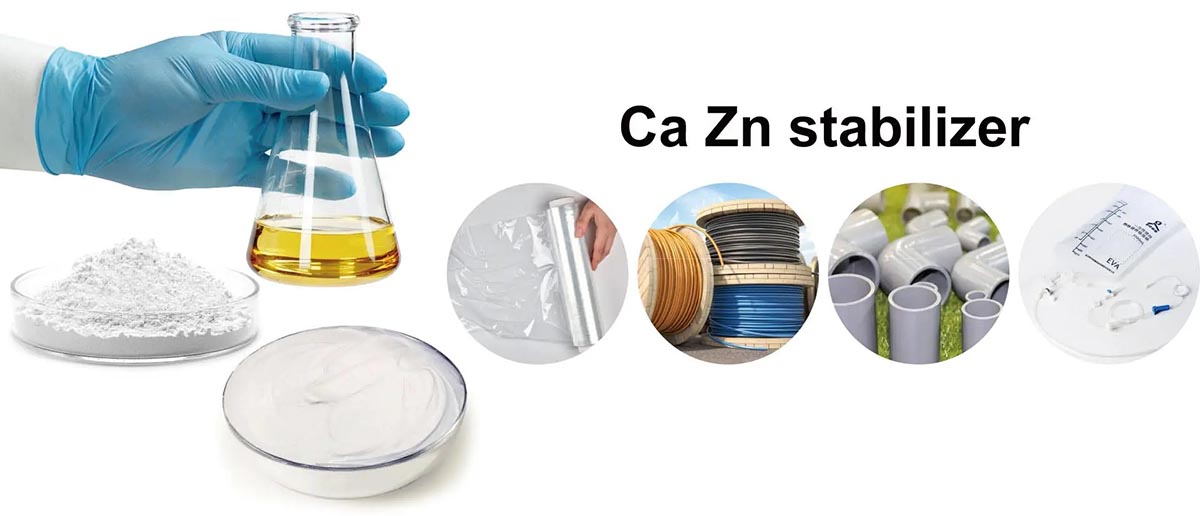
Calcium Zinc (Ca-Zn) Stabilizers: Eco-Friendly Performance for Diverse PVC Products
Calcium Zinc stabilizers are a class of non-toxic, heavy metal-free additives that have gained immense popularity in recent years, driven by global regulatory pushes for environmentally friendly and safe materials. Composed of calcium salts, zinc salts, and auxiliary components (such as antioxidants, lubricants, and chelating agents), Ca-Zn stabilizers work by neutralizing hydrochloric acid (HCl) released during PVC degradation and inhibiting the chain reaction that breaks down the polymer.
▼ Key Advantages of Ca-Zn Stabilizers
• Types of PVC Stabilizers Explained for Different PVC Applications•Non-Toxic & Eco-Friendly: Free from heavy metals like lead, cadmium, and mercury, Ca-Zn stabilizers comply with strict regulations such as REACH, RoHS, and FDA, making them suitable for food contact, medical, and consumer products.
• Versatility: Adaptable to both rigid and flexible PVC formulations, with excellent heat stability and weather resistance for outdoor applications.
• Cost-Effective: Offers a balance of performance and affordability, making it a preferred choice for high-volume applications.
• Low Migration: Minimal migration of components, ensuring the purity of end products—critical for medical and food-contact PVC.
▼ Ideal Applications for Ca-Zn Stabilizers (TOPJOY Product Fit)
TOPJOY’s Ca-Zn stabilizer series are engineered to meet the demands of multiple PVC applications:
• Pipes (Potable Water & Drainage)
Potable water pipes require stabilizers that are non-toxic and do not leach harmful substances into water. TOPJOY’s Ca-Zn stabilizers for rigid PVC pipes provide excellent long-term heat stability during extrusion and resistance to chlorine in water, ensuring the pipes maintain structural integrity for decades. They also comply with NSF/ANSI 61 standards, making them ideal for municipal water supply systems and residential plumbing.
• Tarpaulins (Agricultural & Industrial)
PVC tarpaulins need to withstand harsh outdoor conditions—UV radiation, temperature fluctuations, and moisture—without discoloring or becoming brittle. TOPJOY’s flexible Ca-Zn stabilizers are blended with UV absorbers and antioxidants to enhance weather resistance, ensuring tarpaulins retain their flexibility and strength for agricultural (crop covers, greenhouses) and industrial (cargo protection, construction) use.
• Medical Devices (Non-Sterile & Disposable)
For disposable medical products like IV bags, catheters, and wound dressings, non-toxicity and low migration are non-negotiable. TOPJOY’s FDA-compliant Ca-Zn stabilizers meet USP Class VI standards, ensuring no harmful components migrate into bodily fluids or medications. They also provide excellent processability for thin-walled PVC films and tubes used in medical devices.
• Cables
In residential and commercial cable applications, LSZH cables require stabilizers that support fire safety by emitting minimal smoke and toxic fumes. TOPJOY’s Ca-Zn stabilizers for cables offer low smoke emission and compatibility with LSZH formulations, making them suitable for building wiring and indoor cabling systems.
Tin Stabilizers: Premium Performance for High-Demand PVC Applications
Tin stabilizers, also known as organotin stabilizers, are a class of high-performance additives renowned for their exceptional heat stability, clarity, and migration resistance. They are classified into three main types: methyl tin, butyl tin, and octyl tin, each with varying levels of performance and regulatory compliance. Tin stabilizers act by forming stable complexes with PVC chains, preventing HCl release and chain scission even at high processing temperatures.
▼ Key Advantages of Tin Stabilizers
• Superior Heat Stability: Outperforms Ca-Zn and Ba-Zn stabilizers at high temperatures (180–220°C), making them ideal for rigid PVC processing (injection molding, extrusion) and high-temperature end-use.
• Excellent Clarity: Ensures PVC products remain transparent or translucent, a critical requirement for medical devices, food packaging, and clear pipes.
• Low Migration & Odor: Minimal volatile components, making them suitable for sensitive applications like medical and food contact.
• Long-Term Durability: Provides consistent performance over the lifespan of the product, even in harsh environments.
▼ Medical Devices (Sterile & Reusable)
Sterile medical devices like surgical instruments, dialysis equipment, and reusable catheters require stabilizers that can withstand repeated sterilization (autoclaving, ethylene oxide) without degrading. TOPJOY’s medical-grade tin stabilizers offer exceptional heat resistance and compatibility with sterilization processes, while complying with FDA and EU Medical Device Regulation (MDR) standards. Their clarity ensures visibility of fluids or components inside PVC devices.
▼ Pipes (Industrial & High-Pressure)
Industrial pipes carrying chemicals, oils, or high-pressure fluids demand stabilizers that resist corrosion and maintain structural integrity at elevated temperatures. TOPJOY’s tin stabilizers for rigid PVC pipes provide superior chemical resistance and heat stability, making them suitable for chemical processing plants, oil refineries, and high-pressure irrigation systems.
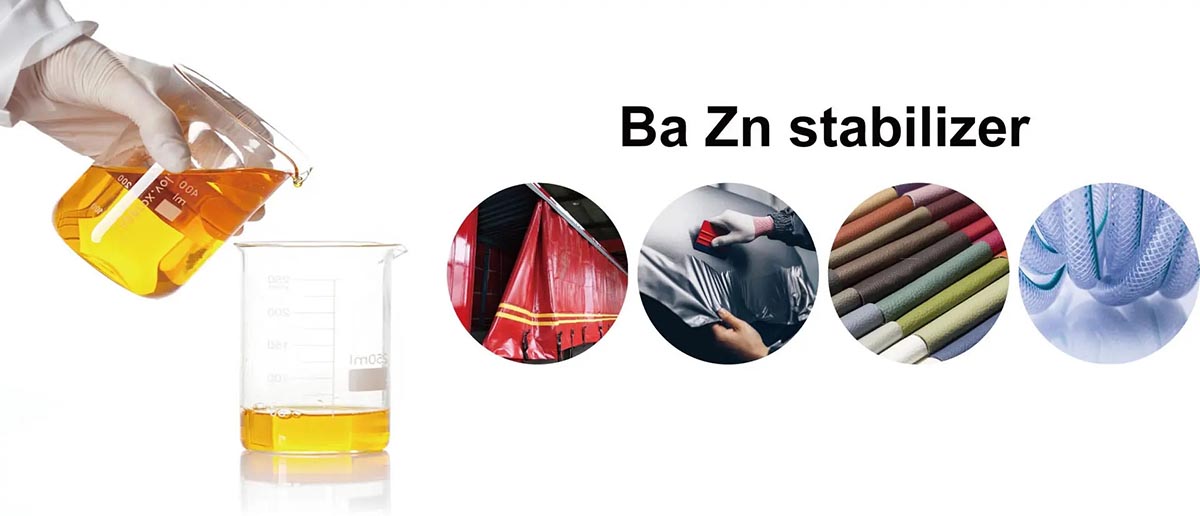
Barium-Zinc (Ba-Zn) Stabilizers: Cost-Effective Heat Stability for Flexible PVC
Barium-Zinc stabilizers are a class of heavy metal-containing additives (barium is an alkaline earth metal) that offer excellent heat stability and processability for flexible PVC. Composed of barium salts, zinc salts, and auxiliary lubricants, Ba-Zn stabilizers are widely used in industrial applications where cost and performance balance are prioritized, and heavy metal restrictions are less stringent.
▼ Key Advantages of Ba-Zn Stabilizers
• Superior Heat Stability for Flexible PVC: Excels in flexible formulations (e.g.PVC compounds with high plasticizer content) processed at moderate to high temperatures.
• Cost-Effective: Offers higher heat stability than Ca-Zn at a competitive price point, making it ideal for high-volume industrial applications.
• Good Compatibility: Works well with a wide range of plasticizers, lubricants, and other additives, ensuring formulation flexibility.
• Excellent Processability: Reduces melt viscosity and improves flow during extrusion, calendering, and injection molding, increasing production efficiency.
▼ Ideal Applications for Ba-Zn Stabilizers (TOPJOY Product Fit)
TOPJOY’s Ba-Zn stabilizer series are optimized for flexible PVC applications:
• Tarpaulins (Industrial Heavy-Duty)
Heavy-duty industrial tarpaulins (used for truck covers, construction site barriers, and cargo containers) require robust stabilizers that withstand rough handling and extreme temperatures. TOPJOY’s Ba-Zn stabilizers for flexible PVC provide excellent heat stability during calendering and weather resistance for outdoor use, ensuring the tarpaulins remain durable and tear-resistant.
• Non-Medical Flexible Goods
Ba-Zn stabilizers are also used in non-medical flexible PVC products like vinyl flooring, wall coverings, and toy components (where local regulations permit heavy metals). TOPJOY’s Ba-Zn formulations offer consistent color stability and durability for these consumer and industrial goods.

Choosing the correct PVC stabilizer depends on several factors: regulatory requirements, application environment (temperature, UV exposure, chemical contact), product type (rigid vs. flexible), clarity needs, and cost.
PVC stabilizers are indispensable for unlocking the full potential of PVC, and selecting the right type is critical to the success of your product. Calcium Zinc stabilizers excel in eco-friendly, non-toxic applications; Tin stabilizers deliver premium performance for high-demand, high-temperature uses; and Barium-Zinc stabilizers offer cost-effective heat stability for flexible PVC.
Whether you’re manufacturing pipes, cables, tarpaulins, or medical devices, TOPJOY’s range of Ca-Zn, Tin, and Ba-Zn stabilizers is designed to meet your specific needs.
Post time: Jan-14-2026