

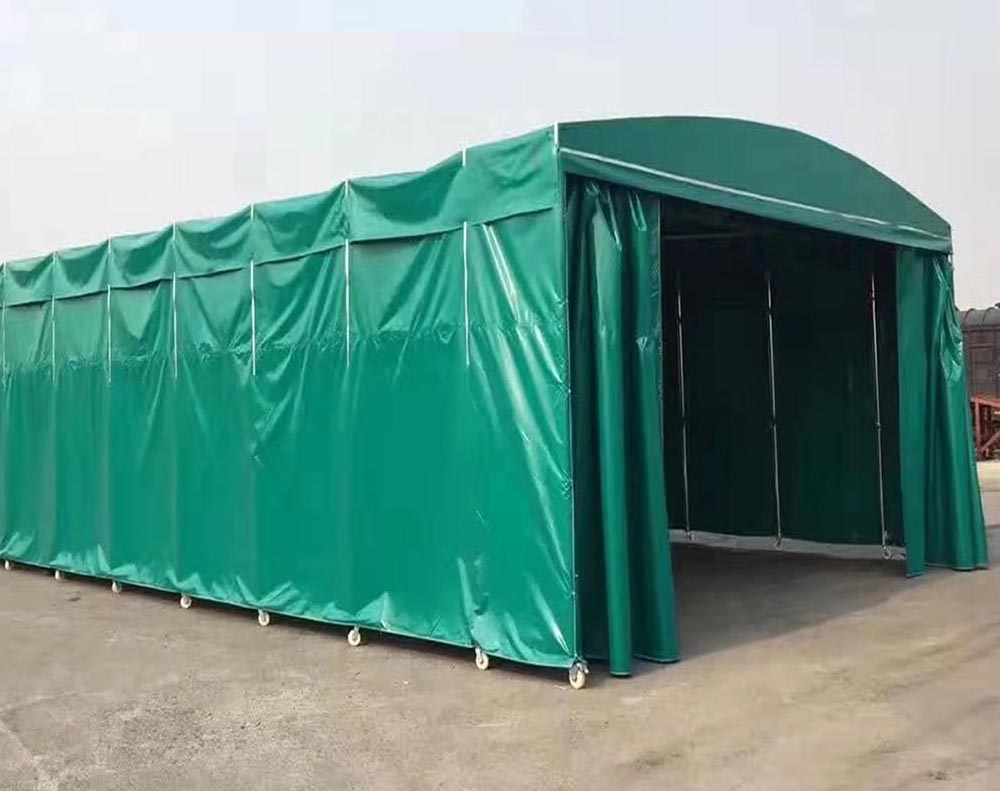
For manufacturers producing PVC tarpaulins, truck covers, agricultural membranes, and outdoor coated fabrics, the right stabilizer system directly determines product lifespan, processing stability, and overall profitability. Outdoor PVC products face continuous UV radiation, extreme temperatures, high humidity, and occasional chemical exposure—conditions that rapidly degrade unstabilized PVC.
Why PVC Tarpaulin Needs Specialized Stabilizer Systems
PVC resin inherently lacks stability under heat and UV light. During high-temperature calendaring, extrusion, or coating, PVC releases hydrogen chloride (HCl), triggering chain scission, yellowing, and loss of mechanical properties. Once deployed outdoors, UV radiation accelerates oxidation, leading to brittleness, cracking, fading, and coating delamination.
A high-performance PVC stabilizer for tarpaulin addresses these challenges by:
• Neutralizing HCl released during processing and outdoor aging
• Absorbing or blocking UV radiation to prevent photodegradation
• Preserving flexibility, tensile strength, and tear resistance year-round
• Ensuring uniform melting and smooth surface finish during production
• Extending service life from 2–3 years to 8–10 years or longer
Without a tailored stabilizer package, even well-formulated PVC tarpaulins fail prematurely, leading to customer complaints, returns, and damage to brand reputation.
Core Performance Requirements for PVC Stabilizer for Tarpaulin
To perform reliably in outdoor tarpaulin applications, stabilizers must meet five non-negotiable performance criteria.
1. Superior Long-Term Thermal Stability
PVC tarpaulin production involves prolonged heating at 160–200°C. Stabilizers must maintain dynamic thermal stability to prevent scorching, yellowing, or molecular breakdown during mixing, calendaring, and extrusion.
Key metrics:
• Static thermal stability ≥180 minutes at 180°C
• Minimal color shift (ΔE < 3) after continuous processing
• No plate-out or die buildup during high-speed production
2. Excellent UV Resistance and Weatherability
Outdoor tarpaulins endure years of direct sunlight. Effective stabilizers combine UV absorption, free-radical scavenging, and excited-state quenching to slow photodegradation.
Required features:
• Compatibility with UV absorbers and HALS
• Protection against UV-A and UV-B radiation (290–400 nm)
• Resistance to humidity, rain, and temperature cycling
• Prevention of chalking, cracking, and loss of gloss after accelerated weathering
3. High Compatibility and Migration Resistance
Tarpaulins use high levels of plasticizers for flexibility. Stabilizers must remain uniformly dispersed without migrating to the surface, which causes blooming, reduced adhesion, or sticky surfaces.
Critical traits:
• Full miscibility with plasticized PVC formulations
• No exudation even at high plasticizer loadings
• Stable compatibility with pigments, fillers, and flame retardants
• Consistent performance across thin films and thick coated layers
4. Enhanced Mechanical Property Retention
Outdoor tarpaulins need to maintain tensile strength, tear resistance, and low-temperature flexibility. Stabilizers should not compromise these properties and should support long-term retention.
Target outcomes:
• Tensile strength retention >80% after 12 months of outdoor exposure
• No embrittlement at temperatures down to -30°C
• Improved coating adhesion to polyester base fabrics
• Resistance to flex fatigue and wind-induced wear
5. Regulatory Compliance and Environmental Safety
Global markets restrict heavy metals in flexible PVC products. Modern PVC stabilizers for tarpaulin must meet RoHS, REACH, and other environmental standards without sacrificing performance.
Key compliance points:
• Lead-free, cadmium-free, and low VOC formulations
• Safe for use in agricultural and construction applications
• Reduced environmental impact throughout the product lifecycle
Common Production Problems and Stabilizer Solutions
Many tarpaulin manufacturers struggle with avoidable issues rooted in poor stabilizer selection or dosing. Below are frequent challenges and practical fixes.
Problem 1: Yellowing or Discoloration During Processing
• Cause: Insufficient early-stage thermal stability; poor HCl neutralization
• Solution: Upgrade to high-efficiency Ca/Zn or organotin stabilizers with enhanced initial color hold; optimize dosing to 1.5–3.0 PHR
• Field Example: A Southeast Asian tarpaulin plant replaced a generic stabilizer with a premium Ca/Zn one-pack, reducing yellowing by 75% and cutting scrap rates from 6% to 1.2%.
Problem 2: Surface Blooming or Plate-Out on Calenders
• Cause: Poor stabilizer compatibility; excessive lubricant; low molecular-weight components
• Solution: Switch to migration-resistant one-pack stabilizers; balance internal and external lubricants; filter raw materials to remove impurities
• Impact: Eliminates downtime for cleaning rolls; improves surface smoothness and printability
Problem 3: Premature Cracking and Brittleness Outdoors
• Cause: Inadequate UV and long-term heat stability; weak antioxidant package
• Solution: Combine primary stabilizers with UV absorbers and HALS; use synergistic co-stabilizers (epoxidized oils, polyols)
• Result: Field life extended by 3–5 years in tropical and high-altitude regions
Problem 4: Inconsistent Melting and Processing Speed
• Cause: Stabilizer-lubricant imbalance; poor fusion behavior
• Solution: Use process-optimized one-pack stabilizers; adjust shear and temperature profiles
• Outcome: 10–15% higher line speed; more consistent thickness and weight
Problem 5: Coating Delamination and Poor Adhesion
• Cause: Stabilizer migration weakens interface bonding
• Solution: Use non-migrating stabilizer grades; optimize surface treatment of base fabric
• Improvement: Peeling strength increased by >30%; meets heavy-duty industrial standards
Comparative Analysis of PVC Stabilizers for Tarpaulin
Selecting the right stabilizer type depends on performance needs, processing equipment, and regulatory rules.
|
Stabilizer Type |
Thermal Stability |
UV Resistance |
Compatibility |
Migration |
Cost |
Best For |
|
Very Good |
Good-Excellent |
Excellent |
Low |
Medium |
General & premium tarpaulins, eco-friendly markets |
|
|
Excellent |
Good |
Excellent |
Very Low |
High |
Transparent films, high-speed lines |
|
|
Good |
Very Good |
Good |
Medium |
Medium-High |
Flexible films, good weatherability |
|
|
Lead-Based |
Excellent |
Good |
Moderate |
Low |
Low |
Non-regulated regions only |
Ca/Zn stabilizers dominate modern tarpaulin production due to strong all-around performance, safety, and compatibility with high-plasticizer formulations. Premium Ca/Zn one-packs include co-stabilizers and antioxidants for simplified dosing and consistent results.
Practical Formulation and Processing Tips
To maximize the value of PVC stabilizer for tarpaulin, follow these field-proven best practices.
1. Optimize Dosing Levels
• Standard tarpaulins: 1.8–2.5 PHR Ca/Zn stabilizer
• Heavy-duty/long-life products: 2.5–3.5 PHR with enhanced UV package
• Always run small-batch trials to fine-tune dosage before full production
2. Use Synergistic Additive Combinations
• Pair stabilizers with UV absorbers (0.3–0.8 PHR) and HALS (0.2–0.5 PHR)
• Add epoxidized soybean oil (2–4 PHR) to boost heat and light stability
• Use phenolic antioxidants to reduce thermal oxidation during processing
3. Control Processing Parameters
• Mixing: Heat to 110–120°C for uniform dispersion; cool to 40–50°C before discharge
• Calendering: Set zones 165–185°C; avoid over-shearing
• Extrusion: Temperature profile 150–190°C; maintain consistent screw speed
4. Ensure Quality Control
• Test static/dynamic thermal stability for each batch
• Conduct QUV/weatherometer testing (≥500 hours) for outdoor grades
• Monitor tensile strength, elongation, and peeling strength post-production
Real-World Case Study: Tropical Outdoor Tarpaulin Upgrade
A manufacturer in Southeast Asia produced truck covers and agricultural tarpaulins that failed within 18–24 months due to intense UV and humidity. Issues included fading, cracking, and delamination.
Changes Made:
• Switched from basic Ba/Zn stabilizer to a high-performance Ca/Zn one-pack designed for extreme weather
• Added UV absorber and HALS booster package
• Adjusted processing temperature and mixing time
Results:
• Service life extended to 5–7 years
• Customer complaints reduced by 90%
• Production speed increased by 12%
• Scrap rate dropped from 5.8% to 1.1%
This upgrade improved product quality and allowed premium pricing, boosting margins significantly.
Key Selection Criteria for PVC Stabilizer for Tarpaulin
When evaluating stabilizers, prioritize these factors:
• Matching weatherability requirements for target climate
• Compatibility with existing formulation and equipment
• Processing stability and impact on line speed
• Migration resistance and surface quality
• Regulatory compliance in target markets
• Total cost-effectiveness (not just raw material price)
The ideal PVC stabilizer for tarpaulin balances performance, processability, and safety while supporting consistent high-volume production.
Investing in a high-quality stabilizer system is one of the most impactful decisions for PVC tarpaulin manufacturers. It directly reduces defects, extends service life, improves customer satisfaction, and strengthens competitive positioning. By focusing on thermal stability, UV resistance, compatibility, mechanical retention, and compliance, you can produce outdoor PVC products that perform reliably in harsh environments year after year.
Small adjustments in stabilizer choice and formulation can lead to large gains in yield, quality, and profitability. Work closely with technical suppliers to develop a customized stabilizer package that fits your products, processes, and markets.
Post time: Mar-19-2026