

Those in the PVC coating or textile coating industry know how much of a headache it can be to find the right Liquid PVC Stabilizer. Wasted batches, inconsistent finishes, even equipment jams—these common pitfalls often stem from choosing the wrong stabilizer. The truth is, Liquid PVC Stabilizer isn’t a “one-size-fits-all” additive; it’s the backbone of any production process, and choosing it correctly can mean the difference between smooth, efficient runs and costly delays. This guide breaks down practical insights to help avoid those mistakes and select a Liquid PVC Stabilizer that maximizes production efficiency, improves product quality, and keeps costs in check.
First, let’s get back to basics—because understanding what a Liquid PVC Stabilizer does (beyond the obvious) is key to making the right choice. PVC, or polyvinyl chloride, is a versatile material, but it’s inherently unstable when exposed to heat, light, or even mechanical stress during processing. When we melt PVC to apply it as a coating on textiles (think waterproof outdoor fabrics, vinyl tablecloths, or industrial coated textiles) or as a standalone PVC coating, it starts to degrade. This degradation leads to yellowing, brittleness, poor adhesion to the substrate, and even the release of harmful byproducts. A Liquid PVC Stabilizer stops this process by neutralizing the unstable chlorine atoms in PVC, preventing thermal decomposition, and protecting the material through every step of production—from mixing to curing.
But here’s the catch: not all Liquid PVC Stabilizers work the same for coating and textile applications. Unlike rigid PVC products (like pipes or windows), PVC coating and textile coating require stabilizers that offer more than just heat resistance. They need to work seamlessly with the flexible nature of textiles, blend well with other additives (like plasticizers and pigments), and ensure the final coating is soft, durable, and adheres properly—all while keeping production lines moving.
Prioritize Compatibility with Your PVC Coating Formulation
This is the first and most critical step—if your Liquid PVC Stabilizer doesn’t play well with the rest of your PVC coating formulation, nothing else matters. Many producers skip this step, opting for a cheap stabilizer only to find it separates from the plasticizer, clogs application equipment, or leaves a patchy finish on textiles. Compatibility isn’t just about mixing well; it’s about ensuring the stabilizer doesn’t react negatively with other additives, including plasticizers (which make the coating flexible), pigments (for color), and fillers (which reduce cost).
For PVC coating and textile coating specifically, look for a Liquid PVC Stabilizer that is miscible with common plasticizers—these are the workhorses of flexible PVC formulations. A miscible stabilizer will blend evenly without requiring extra mixing time, which saves you production hours. Additionally, check if the stabilizer is compatible with the type of PVC resin you use (emulsion PVC is most common for coatings, but suspension PVC is sometimes used for thicker applications). Emulsion PVC requires a stabilizer with good water dispersibility, while suspension PVC needs one that dissolves easily in the resin melt.
Pro tip: Ask your stabilizer supplier for a small sample and test it in your exact formulation before buying in bulk. Mix a small batch, apply it to a test textile, and check for separation, cloudiness, or poor adhesion. This 10-minute test can save you thousands in wasted materials later.
Match the Stabilizer’s Thermal Stability to Your Processing Temperature
PVC coating and textile coating processes involve heating the PVC formulation to temperatures between 140°C and 180°C (depending on the application method—roller coating, knife coating, or dip coating). If your Liquid PVC Stabilizer can’t withstand these temperatures, it will break down before it can protect the PVC, leading to degradation, yellowing, and a poor-quality finish.
Not all Liquid PVC Stabilizers offer the same level of thermal stability. There are three main types used in coating applications, and each has its sweet spot:
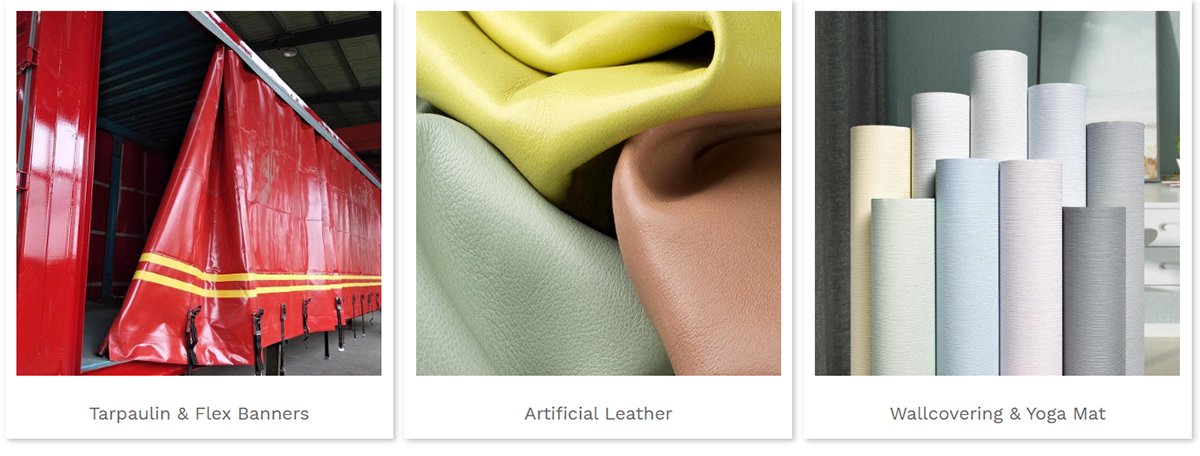
• Calcium-Zinc (Ca-Zn) Liquid PVC Stabilizers: These are eco-friendly, compliant with ROHS and REACH regulations, and offer good thermal stability for most coating processes (up to 160°C). They’re ideal for PVC-coated textiles used indoors or in moderate outdoor conditions (like tablecloths or lightweight outdoor fabrics). Cost-effective, non-toxic, and compatible with most formulations, they are a popular choice for standard textile coating runs. Just note that they may not be suitable for high-temperature processes (above 170°C) or for products requiring long-term outdoor exposure without yellowing.
• Barium-Zinc (Ba-Zn) Liquid PVC Stabilizers: If PVC is processed at higher temperatures (160°C to 180°C) or better weather resistance is needed, Ba-Zn stabilizers are a superior choice. They offer superior thermal stability and UV resistance compared to Ca-Zn, making them perfect for heavy-duty PVC coating applications like industrial fabrics, outdoor awnings, or PVC-coated tarps. Switching to Ba-Zn stabilizers for outdoor textile lines typically results in a 30% reduction in yellowing and a 20% increase in batch consistency. The only downside is they’re slightly more expensive than Ca-Zn, but the cost is worth it for improved quality and reduced waste.
• Tin-Based Liquid PVC Stabilizers: These offer the highest thermal stability (up to 190°C) and are ideal for high-temperature processes like extrusion coating or thick PVC coating applications. They also provide excellent clarity, which is beneficial for producing transparent or light-colored PVC coatings. However, they’re more expensive than Ca-Zn and Ba-Zn, and some tin stabilizers are restricted in certain regions due to environmental regulations. They are best suited for specialized projects, like clear PVC-coated textiles for medical or food-grade applications.
Pro tip: Calculate your average processing temperature (include peaks, not just the set temperature) and choose a stabilizer with a thermal stability rating 10-15°C higher than that. This gives you a buffer and ensures the stabilizer performs consistently even if your equipment temperature fluctuates.
Choose Stabilizers Based on Your PVC-Coated Product’s Actual Use
Your Liquid PVC Stabilizer should not only work well during production but also protect the final product throughout its lifespan. The end-use of your PVC-coated textile or PVC coating will dictate which stabilizer features are most important. For example:
• Outdoor Use: If your product (like outdoor awnings or PVC-coated patio furniture) will be exposed to sunlight, rain, and extreme temperatures, choose a Liquid PVC Stabilizer with built-in UV resistance. Ba-Zn stabilizers are excellent for this, as they prevent photo-degradation (which causes brittleness and fading). Some suppliers also offer Ca-Zn stabilizers with added UV absorbers, which are a more cost-effective option for light outdoor use.
• Indoor Use: For indoor products (like tablecloths, wall coverings, or indoor textiles), UV resistance is less important, but low odor and non-toxicity are key. Ca-Zn stabilizers are perfect here—they’re odorless, non-toxic, and compliant with most indoor air quality standards. Avoid stabilizers with high VOC (volatile organic compound) emissions, as they can cause odors in enclosed spaces and may not meet regulatory requirements.
• Industrial/Heavy-Duty Use: If your PVC coating will be exposed to chemicals, abrasion, or high stress (like industrial conveyor belts or protective clothing), choose a stabilizer that enhances the coating’s mechanical properties. Ba-Zn stabilizers or tin stabilizers work well here, as they improve the coating’s tensile strength and abrasion resistance, reducing wear and tear during use.
This lesson is often learned the hard way in the industry. Using a standard Ca-Zn stabilizer for an outdoor awning project can lead to cracking and fading within 6 months. Switching to a Ba-Zn stabilizer with UV resistance typically doubles product lifespan and significantly reduces customer complaints. Aligning stabilizer choice with end product needs is key to minimizing returns and improving customer satisfaction.
Evaluate Processing Ease (It Saves You Time and Money)
In production, time is money—and a Liquid PVC Stabilizer that’s easy to handle and use can significantly improve your efficiency. Here are the processing factors to look for:
• Flowability: Liquid stabilizers should have a consistent viscosity that’s easy to pump and meter into mixing systems. Avoid stabilizers that are too thick (they’ll clog pumps) or too thin (they’ll mix unevenly). A viscosity between 500-1500 mPa·s at 25°C works well with most standard mixing equipment.
• Mixing Time: A good Liquid PVC Stabilizer should blend with your formulation in 5-10 minutes (or less). If you’re spending 20+ minutes mixing to get a uniform blend, you’re wasting production time. Look for stabilizers labeled “fast-dispersing” or “easy-mixing”—these are designed for high-volume production lines.
• Low Volatility: Stabilizers with high volatility will evaporate during processing, leaving less of the active ingredient to protect the PVC. This leads to inconsistent results and requires you to use more stabilizer (increasing costs). Choose a stabilizer with low volatility—look for a volatility rating of less than 2% at 105°C for 24 hours.
Another thing to consider is the stabilizer’s compatibility with your application method. For knife coating (common in textile coating), you need a stabilizer that doesn’t affect the coating’s viscosity too much—too thick, and the knife will leave uneven layers; too thin, and the coating will run. For roller coating, a stabilizer with good lubricity can help prevent the PVC from sticking to the rollers, reducing downtime for cleaning.
Don’t Overlook Regulatory Compliance
Regulations around PVC additives (including Liquid PVC Stabilizer) are getting stricter, especially in the EU, US, and Asia. Using a non-compliant stabilizer can lead to fines, product recalls, and damage to your brand reputation. This is especially important if you export your PVC-coated textiles or PVC coating products.
For most markets, look for a Liquid PVC Stabilizer that is compliant with:
• ROHS: Restricts the use of heavy metals (like lead, cadmium, and mercury) in electrical and electronic products—but it also applies to many PVC coatings used in these products.
• REACH: Regulates the use of chemicals in the EU—many traditional stabilizers (like lead-based ones) are banned under REACH.
• FDA: If your product is used in food contact (like PVC-coated food packaging or tablecloths), the stabilizer must be FDA-approved.
Ca-Zn and Ba-Zn stabilizers are generally compliant with these regulations, but always ask suppliers for a compliance certificate. Keeping copies of these certificates on file ensures adherence to all market requirements and provides peace of mind.
Balance Cost and Performance
Controlling costs is a top priority for any production line, but choosing the cheapest Liquid PVC Stabilizer available is almost always a false economy. Many producers have tried this approach, only to experience 15% more wasted batches (due to poor compatibility and thermal stability) and additional rework costs. The total cost often ends up being 20% higher than using a mid-range stabilizer.
Instead of focusing solely on the upfront cost, calculate the “total cost of ownership” of the stabilizer. This includes:
• Upfront cost per kilogram
• Dosage rate (how much stabilizer you need to use per batch—some high-performance stabilizers require less, so they’re more cost-effective in the long run)
• Waste reduction (fewer wasted batches mean less material and labor cost)
• Downtime reduction (easier processing means less time spent cleaning equipment or fixing issues)
For example, a mid-range Ba-Zn stabilizer may cost $2 more per kilogram than a cheap Ca-Zn stabilizer, but it requires 10% less dosage and reduces waste by 15%. Over a year, this can save producers thousands of dollars. A key industry rule of thumb: spend 10-15% more on a high-quality stabilizer if it improves batch consistency and reduces waste—it’s always worth it.
Tips from TopJoy Chemical
For those new to choosing Liquid PVC Stabilizer for coating and textile production, these final tips from industry veterans can help streamline the process and avoid common mistakes:
• Build a relationship with your supplier: A good supplier will understand your production process and help you choose the right stabilizer. They can also provide technical support if you run into issues (like yellowing or poor adhesion) and may offer custom formulations if your needs are unique.
• Test, test, test: Never buy a bulk quantity of stabilizer without testing it in your exact formulation and processing conditions. Even if a stabilizer works for another producer, it may not work for you—every production line is different.
• Monitor performance over time: Don’t set it and forget it. Regularly check your batches for consistency, yellowing, and adhesion. If you notice issues, adjust your stabilizer choice (or dosage) before they become major problems.
• Stay updated on new technologies: The Liquid PVC Stabilizer market is constantly evolving, with new eco-friendly and high-performance options being released. Attending industry trade shows and reading industry publications helps producers stay informed and discover new stabilizers that can improve production efficiency and product quality.
Choosing the right Liquid PVC Stabilizer for your PVC coating and textile production doesn’t have to be complicated. By focusing on compatibility, thermal stability, end-use requirements, processing ease, regulatory compliance, and cost-performance balance, you can select a stabilizer that keeps your production line running smoothly, improves your product quality, and reduces costs. Remember: the best stabilizer isn’t the most expensive or the most popular—it’s the one that fits your unique production needs.
Post time: Mar-06-2026