

Core Definition of Fast Furniture and Its Material Selection Logic
Fast furniture inherits the commercial logic of fast fashion apparel, defined as mass-produced, trend-sensitive household furnishings featuring short design iteration cycles, cost-oriented raw material procurement, and a designed service life of between 1 and 5 years instead of traditional lifelong durable furniture. Supported by global cross-border e-commerce, including Amazon Home, Wayfair, and offline flat-pack furniture giants, this segment has maintained steady annual growth above 3.1% globally since 2022, with PVC decorative profiles, flexible PVC upholstery leather, and PVC foamed skirting boards occupying nearly 42% of all plastic auxiliary components used in finished fast furniture products.
Different from classic solid wood and long-life customized furniture focusing on weather resistance and long-term dimensional stability, fast furniture brands prioritize three core indicators during raw material screening: unit production cost, short-cycle molding efficiency, and quick color matching for seasonal style updates. Such core positioning fundamentally rewrites the procurement preference of downstream furniture compound factories toward PVC stabilizer grades, splitting the whole stabilizer consumption market into polarized high-end and low-end tracks. Most mid-tier fast furniture manufacturers limit raw material additive cost within 7% of total PVC formulation expense, while premium fast home decor lines targeting European and North American high-street home stores accept additive cost up to 13% to satisfy regional environmental compliance standards.
Global regulatory upgrades, including EU REACH Annex XVII, US California Prop 65, and Canada CSA home product codes, further amplify such demand differentiation: low-cost bulk fast furniture for emerging Southeast Asian and Latin American markets relaxes long-term anti-yellowing requirements but keeps strict cost caps, whereas export-oriented fast furniture entering developed markets must eliminate heavy-metal stabilizer formulas and adopt compliant high-end non-toxic stabilizer systems.
Divergent Demand Drivers for High-End and Low-End PVC Stabilizers in the Fast Furniture Supply Chain
• Driving factors boosting high-end PVC stabilizer consumption
High-end PVC stabilizers represented by premium organotin stabilizers and customized high-efficiency calcium zinc stabilizers mainly serve export-focused fast furniture batches sold to the EU, the USA, Australia, and Japan, where three rigid industry rules push steady order growth. First, the mandatory non-lead policy completely bans lead-containing low-cost stabilizers for indoor furniture upholstery and decorative profiles in the above regions starting from 2025, eliminating low-end lead salt stabilizer’s market access qualification. Second, fast furniture focusing on transparent PVC cabinet door panels, food-contact dining table edge wrapping requires outstanding initial color retention and high light transmittance, a performance only achievable via refined organotin stabilizer formulation rather than conventional low-grade calcium zinc or barium zinc blends. Third, mid-to-high-price fast home decor targeting Gen Z consumer groups emphasizes recyclable raw material attributes; high-end liquid calcium zinc stabilizers improve PVC scrap recycling rate by over 18% compared with low-cost granular stabilizer products, matching global circular home furnishing development trends.
• Cost compression triggers sustained low-end stabilizer bulk purchases
Most entry-level fast furniture distributed via discount supermarkets and cross-border low-price platforms adopts low-cost liquid barium zinc stabilizers and economical generic calcium zinc formulas, driven by fierce terminal price competition across global fast furniture brands. Since fast furniture is designed for short replacement cycles, downstream manufacturers cut unnecessary long-term anti-aging and outdoor weather resistance configurations to compress total production costs, making low-end stabilizers the optimal cost-saving option for opaque PVC backboards, hidden skirting, and inner cabinet plastic accessories that stay away from direct sunlight exposure. In addition, Southeast Asian local furniture compound factories with backward formulation technology lack precision mixing equipment required for high-end stabilizer dispersion, further expanding low-end stabilizer’s regional incremental demand in emerging market fast furniture production bases.
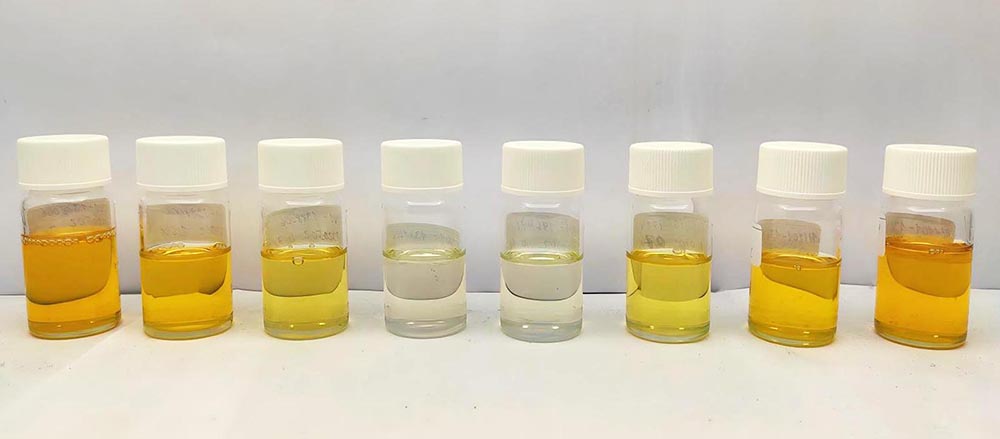
Structural Changes of Stabilizer Demand Driven by the Fast Furniture Trend
The booming fast furniture industry brings two obvious structural shifts across global PVC stabilizer consumption structure from 2023 to 2026, summarized in the below comparison table covering consumption proportion change and application scope adjustment:
|
Stabilizer Grade |
Main Product Category |
Fast Furniture Driven Demand Change |
Typical Fast Furniture Application |
|
High-end PVC stabilizers |
Refined organotin stabilizers, premium composite calcium zinc stabilizers |
Annual consumption CAGR 4.2%, proportion rises from 27% to 35% in the furniture-grade stabilizer market |
Transparent cabinet PVC panel, food-grade table edge wrap, outdoor fast furniture anti-UV upholstery |
|
Low-end PVC stabilizers |
Generic liquid barium zinc stabilizers, economical ordinary calcium zinc |
Bulk shipment grows 2.8% annually, market share drops from 73% to 65% |
Opaque cabinet backboard, inner hidden PVC accessories, non-exposed foamed skirting |
Data sourced from Mordor Intelligence’s global PVC additive industry quarterly tracking report 2025–2026.
From a regional split perspective, European and North American fast furniture manufacturing bases continuously lift the high-end stabilizer procurement ratio to over 60% of total purchase volume, while India, Indonesia, and Vietnam fast furniture industrial parks keep the low-end stabilizer occupying above 72% of local consumption volume. Notably, a new middle-tier demand niche emerged in the past two years: many domestic mid-range fast furniture brands launch semi-premium seasonal limited home items, selecting modified mid-cost calcium zinc stabilizers between high- and low-end grades, gradually forming an incremental intermediate market to ease extreme market polarization.
Practical Operational Advice for PVC Stabilizer Manufacturers and Compounders
Based on the above demand structure variation, targeted actionable suggestions are split into three directions for stabilizer suppliers to optimize product layout and expand profit margins, solving core pain points including unsuitable inventory structure and mismatched product development faced by most small and medium stabilizer factories.
First, classify product lines by end-market destination to avoid blind capacity input. For clients supplying fast furniture exported to developed countries, focus on upgrading high-end PVC stabilizer formulations: optimize organotin stabilizer low-precipitation formula and develop lubricant-integrated high-efficiency calcium zinc stabilizer to reduce downstream compound factory extra auxiliary additive input cost, forming a differentiated competitive advantage against generic high-end products. For clients serving emerging market low-price fast furniture, keep streamlined low-end liquid barium zinc stabilizer production lines without excessive high-performance modification to lock raw material cost advantage, ensuring unit price competitiveness in bulk spot bidding.
Second, launch a customized small-batch trial formulation service matching fast furniture’s short R&D cycle feature. Fast furniture updates seasonal design every 3 to 6 months with frequent PVC raw material color and hardness adjustments; stabilizer producers can provide 20 kg small sample customized stabilizer test formulas, helping downstream furniture compounders shorten new product trial period from 12 days to 4 days, improving client stickiness effectively.
Third, adjust the inventory turnover strategy following the fast furniture peak sales season rhythm. Global fast furniture procurement peaks concentrate on Q3–Q4 each year ahead of Black Friday and Christmas promotions; manufacturers increase high-end stabilizer raw material stock 30% in Q2, while low-end stabilizer raw material supplements are arranged in Q1 to match the emerging market spring fast furniture mass production schedule, reducing capital occupation from excessive off-season inventory.
Q&A Section for Industry Practitioners
Q1: Will the fast furniture sustainability trend completely eliminate the low-end PVC stabilizer market space in the next five years?
A1: No complete elimination will happen in the short-to-medium term. While developed market green policies shrink low-end stabilizer’s developed-country market access, emerging economies with loose home product standards maintain robust low-cost fast furniture demand, supporting steady low-end stabilizer basic shipment volume. However, low-end products must gradually remove prohibited heavy metal components per global policy iteration to retain market qualification, accelerating the market exit of obsolete lead-based low-end stabilizers.
Q2: How to judge whether fast furniture downstream clients need high-end PVC stabilizers or low-end grades in early-stage business negotiations?
A2: Confirm three core pieces of information: the client’s finished furniture sales region, the finished product’s exposed or hidden installation position, and the target terminal retail price. Products sold to the EU/USA with exposed surface application and retail price over 99 USD per piece prefer high-end stabilizers; goods for Southeast Asian discount channels used as hidden inner accessories with unit price below 35 USD mostly adopt low-end stabilizer formulas.
Q3: Can mid-tier modified calcium zinc stabilizer replace partial high-end organotin stabilizer for cost reduction of export fast furniture?
A3: Partial replacement is feasible for non-transparent export fast furniture accessories. Optimized composite calcium zinc stabilizer can satisfy REACH compliance and basic anti-yellow requirements with cost 40% lower than standard organotin stabilizer, yet transparent cabinet panel production still relies on organotin high-end stabilizer for guaranteed light transmittance performance.
Post time: Jun-22-2026