

High-speed extrusion has become the mainstream production mode for modern PVC products, significantly boosting output efficiency and reducing manufacturing costs. However, faster processing speed brings unavoidable technical challenges for PVC production. Intense shear friction and rapid temperature rise during continuous high-speed operation easily trigger PVC thermal degradation, resulting in yellowing material surfaces, reduced mechanical strength, bubble generation, and even material scorching. Most manufacturers face two common problems: conventional PVC stabilizers work well under low-speed processing but fail to maintain stable performance at high speeds, and blind speed increases lead to frequent defective products and unstable batch quality.
To solve these practical production pain points, this article systematically sorts out the core thermal degradation inhibition mechanisms of PVC Stabilizer, analyzes the dynamic stability failure causes in high-speed extrusion scenarios, and summarizes actionable key optimization technologies and operational guidelines. We also answer common industry questions to help production engineers and technical directors effectively improve dynamic thermal stability and achieve stable high-efficiency PVC production.
Core Thermal Degradation Mechanism of PVC During Processing
To master stability enhancement technologies, it is necessary to clarify the inherent degradation logic of PVC materials. The molecular chain of pure PVC contains unstable structural points such as allyl chlorine and tertiary carbon chlorine. When the processing temperature exceeds 170°C or the material bears continuous strong shear force, these weak points break and release hydrogen chloride (HCl).
The biggest hazard of HCl is its self-catalytic effect. The released HCl does not volatilize completely in time but continues to catalyze further chain scission of PVC molecules, forming a continuous chain degradation reaction. This process generates conjugated double bonds, gradually turning the material from light yellow to dark brown or black. Meanwhile, molecular chain fracture reduces tensile strength, toughness, and weather resistance, directly leading to unqualified finished products. Unlike static thermal aging, high-speed extrusion combines high temperature and strong shear force, accelerating degradation efficiency several times and putting forward higher requirements for PVC stabilizer performance.
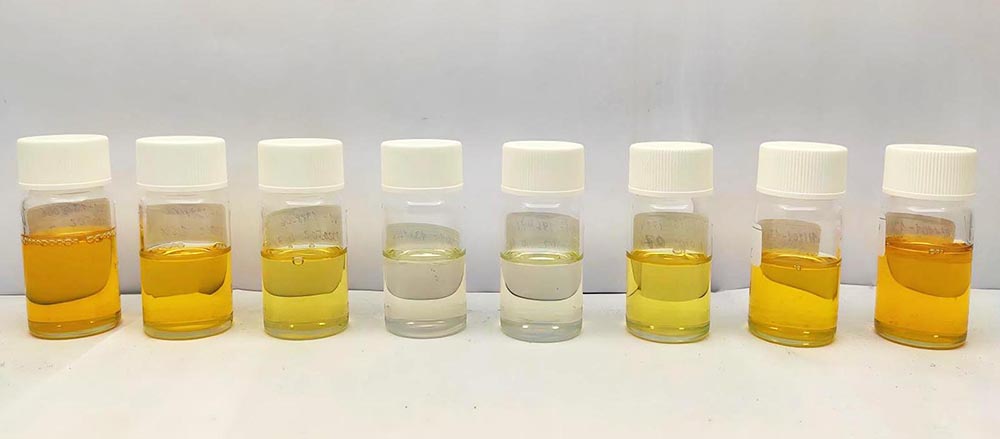
Inhibition Mechanisms of PVC Stabilizers Against Thermal Degradation
Qualified PVC stabilizers do not simply lower processing temperature but intervene in the whole degradation chain reaction through three core synergistic mechanisms to block material deterioration fundamentally. These professional mechanisms are the theoretical basis for improving dynamic thermal stability in high-speed extrusion.
1. Rapid HCl Absorption to Terminate Self Catalysis
This is the most basic and critical function of all mainstream PVC stabilizers. Active components in stabilizers can quickly capture and neutralize HCl generated by PVC pyrolysis, eliminating the core catalyst of chain degradation. Without continuous HCl catalysis, the thermal degradation reaction is forced to slow down or terminate, effectively delaying material discoloration and structural damage. This mechanism works throughout the extrusion process and is the primary guarantee for basic processing stability.
2. Replacement of Unstable Chlorine Atoms to Fix Molecular Defects
PVC molecular structural defects are the root cause of continuous degradation. High-efficiency stabilizers represented by organic tin and high-purity calcium-zinc systems can replace unstable active chlorine atoms on PVC molecular chains through coordination reactions. The replaced molecular chains form chemically stable structures that are not easy to break under high temperature and shear force, fundamentally reducing the probability of initial degradation and extending the induction period of thermal aging.
3. Free Radical Suppression and Conjugated Bond Repair
During high-speed extrusion, shear friction generates a large number of free radicals, which aggravate molecular chain oxidation and fracture. Composite PVC stabilizers matched with auxiliary antioxidants can capture active free radicals, block oxidative degradation, and inhibit the continuous growth of conjugated double bonds. This synergistic effect avoids rapid yellowing of materials under long-term continuous high-speed processing.
Why Conventional Stabilizers Fail in High Speed Extrusion
Many manufacturers wonder why the same PVC stabilizer formula works stably at low speed but deteriorates sharply once the extrusion speed increases. The essential reason lies in the difference between static thermal stability and dynamic thermal stability. Low-speed processing has mild shear force, sufficient heat dissipation time, and slow HCl release speed, so conventional stabilizers can fully exert their efficacy. In high-speed extrusion scenarios, three extreme working conditions break the original stability balance.
First, instantaneous shear heat surges, making the material’s actual internal temperature 10–20°C higher than the set machine temperature, exceeding the stable temperature threshold of ordinary stabilizers. Second, the material’s residence time in the barrel is shortened, requiring stabilizers to complete HCl capture and molecular defect repair in an instant, while conventional slow-release stabilizers cannot respond in time. Third, continuous high-speed operation accumulates residual stress and micro-degradation points, which eventually evolve into obvious quality defects.
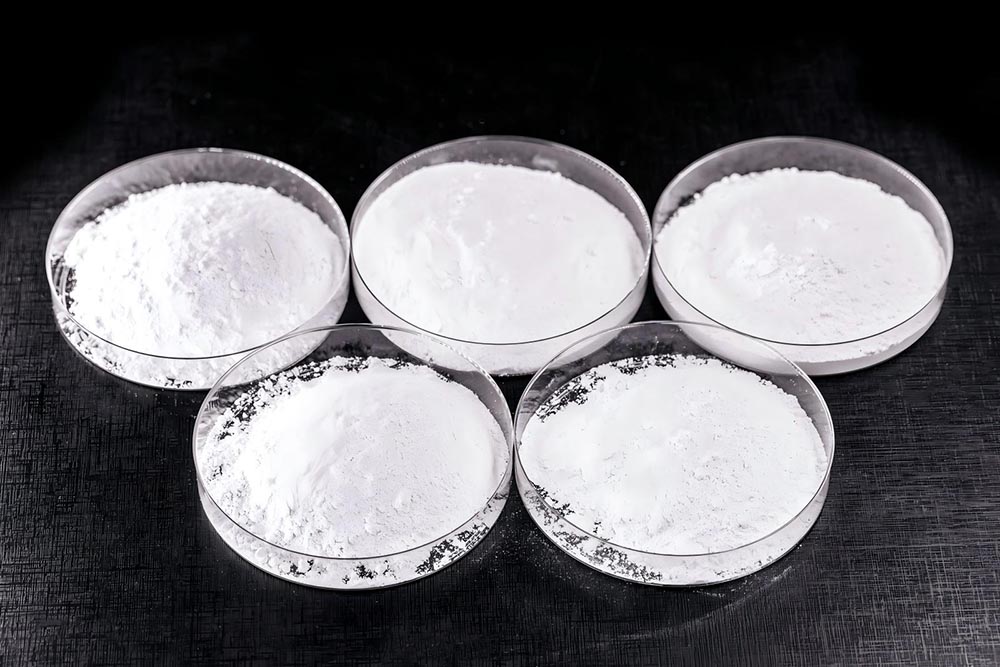
Key Technologies to Improve Dynamic Thermal Stability for High Speed Extrusion
Combined with the degradation mechanism and high-speed processing characteristics, the following four targeted and practical technical optimization schemes can significantly enhance the dynamic stability of PVC materials, solving common problems such as yellowing, bubbling, and unstable size in high-speed production.
1. High Efficiency Composite Stabilizer Formula Optimization
Single-component stabilizers have obvious performance limitations and cannot adapt to high-speed dynamic processing. The optimal solution is to adopt a compound system with main stabilizers and functional auxiliary stabilizers. For example, matching high-purity organic tin main agents with auxiliary stabilizers such as polyols and β-diketones can realize layered intervention: main agents quickly neutralize instantaneous high-concentration HCl, and auxiliaries repair residual molecular defects and inhibit free radical oxidation. This composite formula effectively improves dynamic response speed and continuous stability, suitable for ultra-high-speed extrusion of high-transparency and high-precision PVC products.
2. Precision Dosage Grading and Stage Matching
Blindly increasing the dosage of PVC stabilizers cannot improve stability and may cause precipitation, blooming, and increased production costs. High-speed extrusion requires staged dosage adjustment according to processing segments. In the feeding and melting section with severe shear heat, appropriately increase the proportion of fast-acting stabilizers; in the homogenizing and extrusion shaping section, maintain conventional dosage to ensure continuous stability. Precision grading dosing can maximize stabilizer efficiency while controlling costs.
3. Processing Parameter Synchronous Calibration Technology
Dynamic thermal stability depends not only on stabilizer quality but also on parameter matching. In high-speed production, the machine set temperature, screw speed, and feeding speed must be synchronized with the stabilizer performance. Avoid excessive speed rise that causes shear heat accumulation; appropriately adjust the barrel cooling system to eliminate temperature deviation between the actual material temperature and set temperature. Regularly calibrate screw wear and equipment heat dissipation efficiency to prevent local overheating degradation caused by equipment aging.
4. Low Shear Formula and Lubricant Synergistic Optimization
Excessive shear force is the main inducement of dynamic degradation. Reasonable matching of internal and external lubricants can reduce screw shear friction, cut down shear heat generation from the source, and reduce the burden on PVC stabilizers. The synergistic cooperation of lubricants and stabilizers forms a dual protection system of low heat generation and efficient stabilization, which is the core auxiliary technology for long-term stable high-speed production.
Q&A: Practical Problems in High Speed Extrusion Stability Improvement
Q1: Will increasing the PVC stabilizer dosage completely solve high-speed yellowing?
A: No. High-speed yellowing is mainly caused by untimely dynamic response and shear heat accumulation. Excessive stabilizer dosage will lead to surface precipitation, affecting product gloss and printing performance. The correct solution is to optimize the composite formula and adjust processing parameters rather than simply increasing dosage.
Q2: Which type of PVC stabilizer is more suitable for long-term high-speed continuous production?
A: High-purity organic tin stabilizers and optimized high-efficiency calcium-zinc composite stabilizers are the best choices. Organic tin systems have fast response speed and excellent dynamic stability, suitable for high-end high-speed extrusion; modified calcium-zinc composite systems balance cost and performance, ideal for mass production of conventional PVC products.
Q3: How to judge insufficient dynamic thermal stability in production?
A: Typical signs include gradual yellowing of continuous production products, sporadic bubble defects, unstable product dimensional tolerance, and increased die carbon deposition. Timely formula and parameter adjustment can avoid large-scale defective material losses.
Practical Operation Suggestions for Manufacturers
To efficiently improve the dynamic thermal stability of high-speed extrusion, manufacturers should establish a standardized optimization logic based on stabilizer mechanism and processing characteristics. First, select targeted high-efficiency composite PVC stabilizer formulas according to product grades and production speed. Second, abandon the single adjustment method of temperature and speed, and realize collaborative optimization of formula, equipment parameters, and auxiliary systems. Third, build regular production monitoring mechanisms to track product color difference, mechanical properties, and die status, and adjust the stabilizer system in real time according to production changes.
In conclusion, the core of improving high-speed extrusion dynamic stability lies in precisely matching the inhibition mechanism of PVC stabilizers with dynamic processing conditions. Only by combining scientific formula design, precise dosage control, and standardized parameter matching can manufacturers completely solve thermal degradation defects, stabilize product quality, and achieve efficient and low-cost large-scale production in high-speed extrusion scenarios.
Post time: May-22-2026