

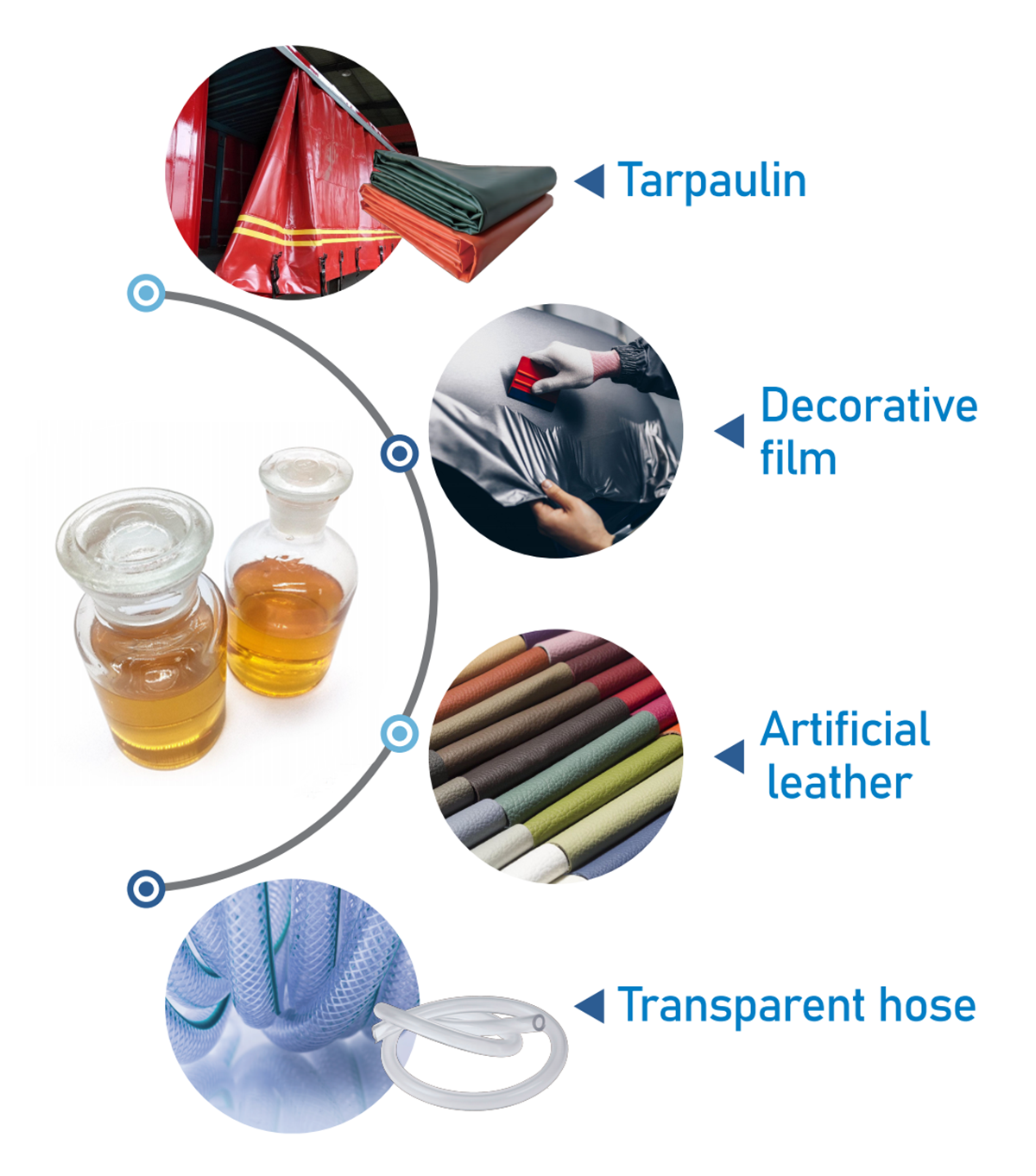
Flexible PVC is everywhere in our daily lives and industrial operations—from wire and cable insulation, food packaging films, and medical tubing to automotive interior trims and garden hoses. Its versatility, cost-effectiveness, and malleability make it a go-to material for countless manufacturers. But here’s the catch: flexible PVC is inherently unstable when exposed to heat, light, or mechanical stress during processing and end-use. Without proper stabilization, it degrades rapidly—turning yellow, becoming brittle, or losing its mechanical properties. This not only ruins product quality but also leads to costly rework, production delays, and even compliance issues.
For decades, manufacturers have turned to various stabilizers to protect flexible PVC, but barium zinc stabilizers have risen to become a top pick for high-performance, eco-friendly projects. Unlike lead-based stabilizers—now restricted due to environmental and health hazards—or calcium zinc alternatives, which often fall short on durability in harsh conditions, barium zinc stabilizers hit the sweet spot between efficacy, safety, and versatility. Even so, many manufacturers struggle with choosing the right grade, fine-tuning dosage, and fixing common issues when using these stabilizers.
Why Barium Zinc Stabilizers Are a Must for Flexible PVC
Before we get into the details, let’s make clear why stabilization is non-negotiable for flexible PVC. PVC molecules contain chlorine atoms, which tend to break off when heated—think extrusion, calendering, or injection molding—or exposed to UV light. This sets off a chain reaction called “dehydrochlorination,” where the PVC loses hydrogen chloride (HCl) and forms double bonds along the polymer chain. These double bonds react quickly with oxygen, leading to oxidation, chain scission, and cross-linking—all of which wear down the material’s performance over time.
Barium zinc stabilizers work by interrupting this degradation cycle in two key ways. First, the barium component acts as an HCl scavenger, neutralizing the byproduct before it can accelerate further degradation. Second, the zinc component inhibits oxidation by forming stable complexes with free radicals generated during processing. Together, they provide robust protection against heat and light, ensuring flexible PVC retains its clarity, flexibility, and mechanical strength over time.
Compared to other stabilizer systems, barium zinc stabilizers offer distinct advantages for flexible PVC:
• Broad Processing Window: They tolerate higher temperatures (up to 180°C in some cases) without losing efficacy, making them suitable for a range of processing methods—from extrusion of thin films to calendering of thick sheets.
• Excellent Compatibility: They mix seamlessly with plasticizers, lubricants, and other additives commonly used in flexible PVC formulations, avoiding issues like blooming (surface migration) or plate-out (build-up on processing equipment).
• Regulatory Compliance: Unlike lead-based stabilizers, barium zinc variants meet global environmental standards (e.g., REACH, RoHS) and are safe for food contact and medical applications when using food-grade options.
• Cost-Effectiveness: A lower dosage is often required compared to calcium zinc stabilizers, reducing overall formulation costs while maintaining performance.
Common Pain Points with Barium Zinc Stabilizers (and How to Fix Them)
Even with their advantages, many manufacturers face challenges when integrating barium zinc stabilizers into flexible PVC formulations. Let’s address the most common issues and provide actionable solutions.
Q1: My Flexible PVC Product Is Turning Yellow—Is the Barium Zinc Stabilizer to Blame?
Yellowing is one of the most frequent complaints, but it’s rarely the stabilizer itself—it’s usually a result of improper formulation or processing. Here’s how to diagnose and fix it:
First, check your stabilizer dosage. Under-dosing is the primary culprit: if there’s not enough barium zinc stabilizer to neutralize HCl and inhibit oxidation, the PVC will degrade and yellow. The optimal dosage depends on the PVC grade, plasticizer content, and processing conditions, but a general rule of thumb is 1.5–3.0 phr (parts per hundred resin). Start at the midpoint and adjust based on results—if yellowing persists, increase by 0.25 phr increments until the issue resolves.
Second, examine your processing temperature. Barium zinc stabilizers have a wide window, but exceeding 190°C can overwhelm their protective properties. Use a temperature probe to verify barrel and die temperatures, and reduce by 5–10°C if overheating is detected. Also, minimize residence time—prolonged exposure to heat (even within the recommended range) can cause gradual degradation.
Finally, check for incompatible additives. Some lubricants (especially stearates) or fillers can react with barium zinc stabilizers, lowering their efficacy. Test small batches with different additive combinations to spot conflicts, and choose lubricants labeled as “compatible with barium zinc systems.”
Q2: The Stabilizer Is Blooming on the Product Surface—How Can I Prevent This?
Blooming occurs when stabilizer molecules migrate to the PVC surface, leaving a powdery residue. This not only affects appearance but also reduces the stabilizer’s long-term effectiveness. The main causes are over-dosing, poor stabilizer solubility, or improper plasticizer selection.
To fix blooming, first reduce the stabilizer dosage—even a slight excess (more than 3.0 phr for most formulations) can lead to migration. If dosage reduction impacts stability, switch to a high-purity barium zinc stabilizer with better solubility. Look for grades with a low melting point (around 60–80°C), as they mix more uniformly with PVC and plasticizers.
Plasticizer choice also matters. Phthalate-based plasticizers (e.g., DOP, DINP) offer better compatibility with barium zinc stabilizers than non-phthalate alternatives (e.g., DOTP). If non-phthalate plasticizers are required (for regulatory reasons), increase the plasticizer content by 2–5 phr to improve stabilizer solubility, or add a small amount of a compatibilizer (e.g., epoxidized soybean oil) to bind the stabilizer to the polymer matrix.
Q3: My Flexible PVC Has Poor UV Resistance—Can Barium Zinc Stabilizers Help?
Barium zinc stabilizers provide moderate UV protection, but they’re not designed for outdoor applications without additional support. If your product will be exposed to sunlight (e.g., garden hoses, outdoor signage), you’ll need to combine the stabilizer with a UV absorber (UVA) or hindered amine light stabilizer (HALS).
A common mistake is using too much UVA—this can react with barium zinc stabilizers and reduce their heat stability. The ideal ratio is 0.2–0.5 phr UVA + 0.1–0.3 phr HALS, combined with 1.5–2.5 phr barium zinc stabilizer. Test the formulation in a weathering chamber to simulate outdoor conditions, and adjust the ratios based on color retention and flexibility after exposure.
For indoor applications (e.g., medical tubing, interior automotive parts), barium zinc stabilizers alone are sufficient—no additional UV additives are needed, which saves on formulation costs.
Q4: I’m Switching from Lead Stabilizers to Barium Zinc—What Adjustments Do I Need to Make?
Many manufacturers are phasing out lead stabilizers due to regulatory pressure, but making the switch to barium zinc isn’t a one-to-one swap—it requires some tweaks to your formulation. Lead stabilizers are better at scavenging HCl but don’t protect against oxidation, so barium zinc blends need a different additive balance to match performance.
First, increase the stabilizer dosage slightly—lead stabilizers typically require 1.0–2.0 phr, while barium zinc needs 1.5–3.0 phr to match performance. Second, add a secondary antioxidant (e.g., Irganox 1076) at 0.1–0.2 phr to enhance oxidation resistance, especially if processing at high temperatures. Third, adjust lubricants—lead stabilizers often act as internal lubricants, so you may need to add 0.2–0.5 phr of an external lubricant (e.g., paraffin wax) to prevent sticking to equipment.
It’s also important to test the transition in small batches first. Run trial extrusions or calenderings to check for yellowing, blooming, or changes in flexibility, and adjust the formulation before scaling up to full production. This avoids costly mistakes and ensures a smooth switch.
How to Select the Right Barium Zinc Stabilizer for Your Flexible PVC Application
Not all barium zinc stabilizers are created equal—choosing the right grade depends on your specific application, processing method, and performance requirements. Here’s a step-by-step guide to selection:
Step 1: Define Your Application Requirements
Start by identifying key performance criteria: Will the product be exposed to heat (e.g., automotive underhood parts), UV light (outdoor use), or chemicals (e.g., medical tubing)? Is food contact or biocompatibility required? For instance, food-grade flexible PVC (e.g., packaging films) requires a barium zinc stabilizer with low heavy metal content (compliant with FDA 21 CFR 177.1960), while industrial hoses may prioritize heat stability over food safety.
Step 2: Consider Processing Conditions
Extrusion, calendering, and injection molding have different temperature and shear requirements. For high-shear processes (e.g., thin-film extrusion), choose a stabilizer with good thermal stability at 170–185°C. For low-shear processes (e.g., calendering), a lower-melting-point grade (60–70°C) will mix more easily with PVC and plasticizers.
Step 3: Evaluate Stabilizer Formulations
Barium zinc stabilizers are available in powder, liquid, and granular forms. Powders are cost-effective but can cause dusting and uneven mixing—ideal for large-scale production with high-speed mixers. Liquids offer better dispersion, making them suitable for thin films and precision applications (e.g., medical tubing). Granules are dust-free and easy to handle, but they come at a higher cost.
Also, look for stabilizers with added co-stabilizers (e.g., epoxidized soybean oil, calcium stearate) —these enhance performance and reduce the need for additional additives in your formulation.
Step 4: Test in Small Batches
Never rely solely on manufacturer specifications—test the stabilizer in your actual PVC formulation. Run trials to check for color retention, flexibility, blooming, and mechanical properties (tensile strength, elongation at break). Compare results with your current stabilizer (or industry benchmarks) to ensure the barium zinc grade meets or exceeds your requirements.
Best Practices for Using Barium Zinc Stabilizers in Flexible PVC
To maximize performance and avoid issues, follow these practical tips:
• Store Stabilizers Properly: Barium zinc stabilizers absorb moisture, which can cause clumping and reduce efficacy. Store in a dry, cool area (below 30°C) in sealed containers, and use within 6 months of purchase.
• Mix Thoroughly: For powder stabilizers, use a high-speed mixer to ensure uniform dispersion—poor mixing leads to inconsistent stability and localized yellowing. Mix PVC resin, plasticizers, and stabilizers at 80–90°C for 5–10 minutes before processing.
• Monitor Processing Parameters: Use temperature controllers and pressure gauges to maintain consistent conditions. Avoid sudden temperature spikes, as they can overwhelm the stabilizer and cause degradation.
• Document Formulations and Results: Keep detailed records of stabilizer dosage, additive combinations, processing conditions, and product performance. This helps identify trends (e.g., dosage adjustments for different PVC grades) and troubleshoot issues quickly.
• Work with a Trusted Supplier: Choose a supplier with expertise in barium zinc stabilizers for flexible PVC. They can provide technical support, custom formulations, and guidance on regulatory compliance—saving you time and reducing risks.
Barium zinc stabilizers are a reliable, compliant way to protect flexible PVC from heat and oxidative degradation—but their performance hinges on choosing the right product, formulating correctly, and dialing in your processing. By addressing common pain points like yellowing, blooming, and poor UV resistance, and sticking to best practices, you’ll be able to optimize your flexible PVC products for performance, durability, and cost-efficiency.
Remember, every formulation is unique—what works for one application may not work for another. Invest time in small-batch testing, and don’t hesitate to consult with your stabilizer supplier for tailored advice. With the right approach, barium zinc stabilizers will help you produce high-quality flexible PVC products that meet regulatory requirements and customer expectations.
Post time: Mar-05-2026