

For PVC manufacturers, exporters, and procurement teams across the globe, regulatory compliance has grown far more stringent over the past few years. Every month, we hear from clients whose full container shipments get detained at EU and US borders, resulting in expensive returns, order delays, and lost long-term buyers—all traced back to substandard eco-friendly PVC stabilizers. A widespread pain point remains: countless suppliers market their stabilizers as heavy metal-free and low-VOC, yet these products still fail independent third-party compliance tests. It leaves factory buyers confused about which green additives are actually safe for export production.
Whether you source PVC heat stabilizers for children’s plastic toys, food-safe PVC packaging, medical tubing, or indoor construction profiles, it is critical to distinguish genuine low-carbon formulations from empty green marketing claims.
Why Traditional PVC Stabilizers Are Being Phased Out Globally
To fully understand why the market is shifting toward greener additive solutions, it helps to look back at the critical flaws of traditional stabilizer formulas that once dominated PVC manufacturing lines.
Traditional lead-based and barium-cadmium PVC stabilizers deliver excellent thermal stability and affordable costs, so they were widely used in PVC pipes, films, and profiles decades ago. However, these formulas contain high levels of lead, cadmium, and other restricted heavy metals. Toxic ingredients will gradually precipitate out during high-temperature extrusion processing, daily product usage, and waste disposal. Long-term exposure harms production workers, end consumers, and the soil and water environments.
Driven by tightening global environmental regulations, traditional heavy metal-containing stabilizers have been strictly banned in Europe, North America, Australia, and most Asian markets. Today, heavy metal-free PVC stabilizers have become the mandatory standard for all export-grade PVC products. Among all green alternatives, calcium zinc PVC stabilizers stand out as the most mainstream and cost-effective solution for mass industrial production.
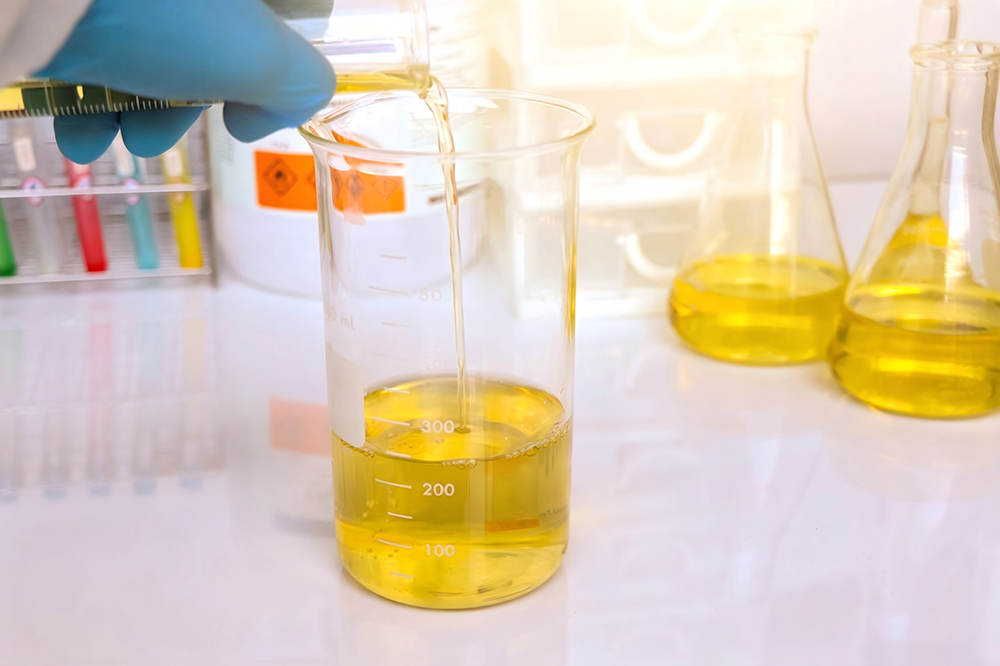
Core Safety Indicators to Verify Genuine Eco-Friendly PVC Stabilizers
Nearly every additive supplier now labels their products eco-friendly or non-toxic, but our internal 2026 random sampling test shows roughly 40% of budget bulk stabilizers cannot pass official third-party compliance audits. Never rely solely on supplier verbal promises or simple product brochures. Instead, evaluate potential eco-friendly PVC stabilizers against these four measurable, non-negotiable safety benchmarks.
1. Full Heavy Metal Free Compliance
This is the most fundamental safety requirement. Qualified heavy metal-free PVC stabilizers must contain zero detectable lead, cadmium, mercury, and hexavalent chromium. Many inferior eco-stabilizers remove lead and cadmium but still retain trace heavy metal impurities from raw material recycling, which will directly cause RoHS test failure.
For export orders, always ask suppliers for full heavy metal test reports issued by SGS or TUV laboratories, instead of simplified self-test documents. This avoids customs inspection risks effectively.
2. RoHS and REACH Dual Certification
RoHS restricts ten hazardous substances in electronic and plastic products, while REACH covers more SVHC high-concern substances required for EU market access. A common misunderstanding among manufacturers: products passing RoHS tests are automatically compliant with REACH standards. This is incorrect.
Some eco-friendly PVC stabilizers meet RoHS limits but contain unlisted SVHC substances that violate REACH regulations. For PVC products sold to the European market, dual RoHS and REACH certificates are indispensable for smooth customs clearance.
3. Low VOC and No Harmful Gas Emission
During high-temperature PVC processing, unqualified stabilizers will release volatile organic compounds and irritating odors. These VOC pollutants worsen workshop working conditions and remain inside finished PVC products, making them unsuitable for indoor household products and closed-space applications.
Well-formulated calcium zinc PVC stabilizers feature stable molecular structures designed for high-temperature PVC processing. Under regular operating temperatures up to 220°C, these eco additives release barely detectable VOCs with zero harsh chemical odors. They support cleaner workshop production environments and meet strict indoor air quality standards for household PVC building materials.
4. Qualified Food Contact Grade Safety
For PVC food packaging, disposable fresh-keeping films, and baby product accessories, stabilizers need to pass food contact safety tests. When heated in high-temperature environments such as microwave heating, qualified eco-stabilizers will not migrate toxic ingredients into food. Only specific upgraded PVC heat stabilizers can meet FDA and EU food contact grade standards for such sensitive scenarios.
Clear Comparison: Qualified Eco Stabilizers vs. Low-Grade Fake Green Stabilizers
The biggest pain point for procurement teams is distinguishing genuine green additives from counterfeit eco-products. We list a direct comparison table covering compliance, performance, and cost for intuitive reference.
|
Testing Item |
Genuine Eco-Friendly PVC Stabilizers |
Low-Grade Fake Green Stabilizers |
|
Heavy Metal Content |
Non-detectable lead, cadmium, and mercury |
Trace heavy metal impurities exist |
|
Certification |
Complete RoHS, REACH, and food contact reports |
Only simple RoHS self-declaration |
|
VOC Emissions |
Ultra-low VOC, no pungent processing odor |
Obvious irritating odor during heating |
|
Processing Stability |
Stable thermal performance, no yellowing for long-term production |
Easy thermal decomposition, fast PVC yellowing |
|
Applicable Scenarios |
Export goods, food contact, children’s products, medical PVC |
Low-end indoor products with no strict compliance requirements |
Practical Sourcing Checklist for Eco-Friendly PVC Stabilizers
Drawing on real-world compliance failure cases we have handled for manufacturing clients, we have compiled a straightforward 4-step sourcing checklist. It requires no advanced chemical expertise, helping your procurement team pick qualified additives accurately every single time:
• Check full third-party test reports: Require SGS or TUV official reports covering heavy metal, VOC, and SVHC tests, not supplier self-made documents.
• Match formulas with application scenarios: Choose standard calcium zinc PVC stabilizers for general profiles and pipes; select food-contact upgraded formulas for packaging and baby products.
• Do factory heating test before bulk order: Run a small batch trial production to check odor and anti-yellowing performance under real processing temperature.
• Confirm batch consistency: Many suppliers provide qualified samples but unqualified bulk goods. Sign contracts with clear compensation clauses for test failure.
Frequently Asked Questions About Eco-Friendly PVC Stabilizers
Below are the most frequently searched questions on Google and the most common doubts raised by our global B2B clients. We deliver clear, technical yet easy-to-understand answers to help you resolve lingering concerns quickly.
Q1: Are all calcium zinc PVC stabilizers heavy metal-free?
No. Regular-grade calcium zinc stabilizers may contain tiny heavy metal residues from auxiliary additives. Only high-purity customized heavy metal-free PVC stabilizers can pass full RoHS and REACH tests. Always verify complete lab reports instead of taking material composition for granted.
Q2: Do eco-friendly PVC heat stabilizers increase overall production costs greatly?
The unit price of green stabilizers is slightly higher than cheap unqualified alternatives, but they reduce hidden costs significantly. Qualified eco-stabilizers lower product rejection rates caused by yellowing, avoid customs return losses, and eliminate fines for non-compliant materials. In long-term mass production, the overall comprehensive cost is more controllable.
Q3: Can eco-friendly PVC stabilizers completely replace traditional lead-based stabilizers in all processing conditions?
Yes. Modern optimized eco-friendly PVC stabilizers have upgraded thermal stability and weather resistance, matching the processing performance of traditional lead-based stabilizers. Formulation adjustment is unnecessary for most conventional PVC extrusion and calendering production lines.
Q4: What is the difference between RoHS compliance and REACH compliance for PVC additives?
RoHS focuses on limiting ten specified hazardous heavy metals and flame retardants, targeting finished plastic products. REACH covers thousands of SVHC substances, focusing on raw material safety and chemical registration. For EU exports, both certifications are mandatory for PVC heat stabilizers.
As global carbon neutrality policies and chemical import regulations grow tighter each year, material safety and compliance are no longer optional upgrades, but fundamental requirements for all PVC manufacturers. Vague green marketing claims can never replace authoritative third-party lab test results. By focusing on full heavy metal inspections, dual RoHS and REACH certifications, low-VOC performance, and scenario-matched formulations, factories can source stable, reliable eco-friendly PVC stabilizers confidently. This proactive approach eliminates compliance risks from raw materials upfront, cuts unnecessary production losses, and helps brands build solid competitiveness in the increasingly strict international plastic market.
Post time: Jul-09-2026