

PVC’s widespread use comes with a critical limitation: its natural vulnerability to degradation when subjected to heat and mechanical stress during processing. PVC stabilizers fill this gap as essential additives, preserving the polymer’s structure and functional properties. Among the available stabilizer types, liquid and powder variants lead the market, each offering distinct characteristics, benefits, and optimal use scenarios.
Before exploring the nuances of liquid versus powder stabilizers, it is essential to grasp the basics of PVC degradation and the non-negotiable need for stabilization. The molecular structure of PVC contains chlorine atoms attached to the polymer backbone, which inherently renders it unstable. When exposed to heat—such as during extrusion, injection molding, or calendering—mechanical shear, or even long-term sunlight exposure, PVC undergoes a chain dehydrochlorination reaction. This process releases hydrogen chloride gas, which acts as a catalyst to accelerate further degradation, creating a vicious cycle. As degradation progresses, the polymer chain breaks down, leading to discoloration, brittleness, loss of mechanical strength, and ultimately, failure of the final product. PVC stabilization works by interrupting this degradation cycle through one or more mechanisms: scavenging HCl to prevent catalytic acceleration, replacing labile chlorine atoms in the polymer chain to reduce the initiation of degradation, inhibiting oxidation, or absorbing UV radiation for outdoor applications. Heat stabilizers, a subset of PVC stabilizers focused on mitigating thermal degradation during processing, are the most commonly used in PVC manufacturing. While both liquid and powder stabilizers function as heat stabilizers, their physical form, composition, and handling properties result in significant differences in performance and applicability.
PVC stabilization works by interrupting this degradation cycle through one or more mechanisms: scavenging HCl to prevent catalytic acceleration, replacing labile chlorine atoms in the polymer chain to reduce degradation initiation, inhibiting oxidation, or absorbing UV radiation. Heat stabilizers, a subset of PVC stabilizers focused on mitigating thermal degradation during processing, are the most common type used in PVC manufacturing. Both liquid and powder stabilizers function as heat stabilizers, but their physical form, composition, and handling properties create significant differences in performance and applicability.
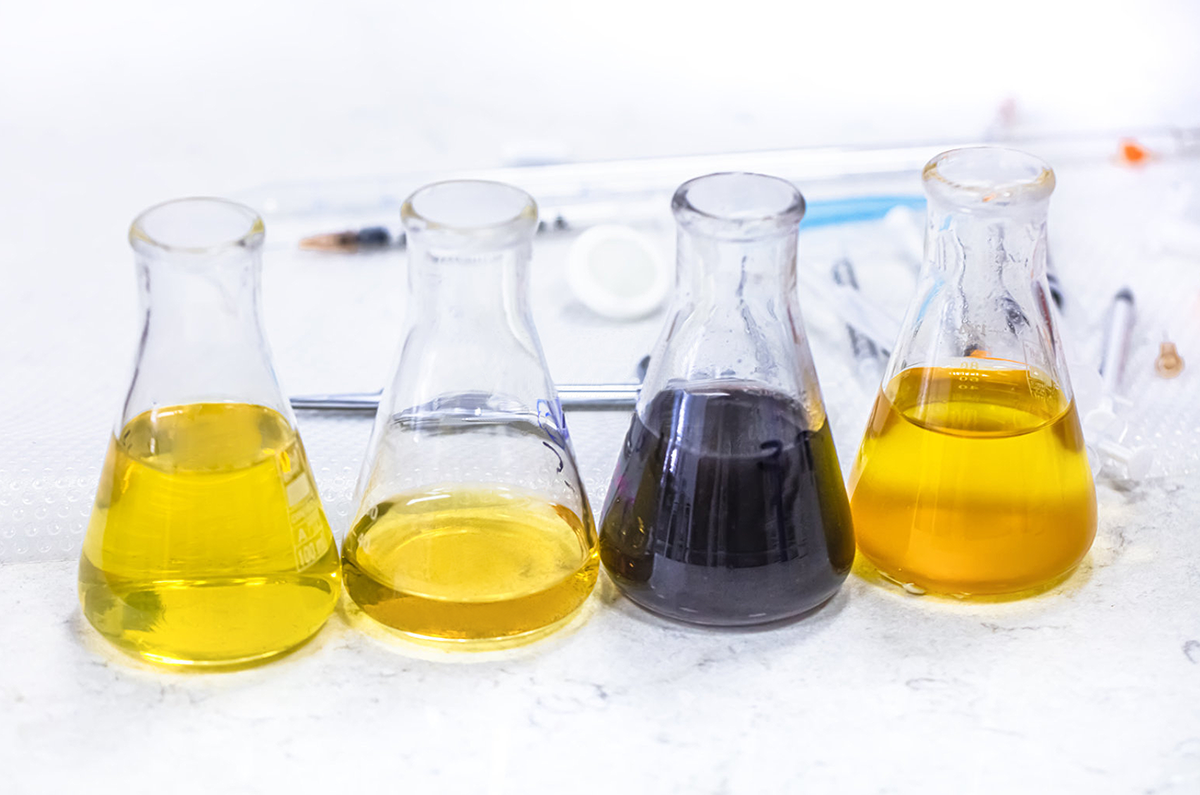
Key Differences Between Liquid and Powder PVC Stabilizers
Liquid and powder PVC stabilizers differ far beyond their physical state; their compositions, compatibility with PVC and other additives, processing requirements, and impacts on end products vary substantially. Starting with composition and chemical nature, powder PVC stabilizers are typically solid formulations based on metal soaps—such as calcium stearate, zinc stearate, or barium stearate—organotin compounds, or mixed metal systems like calcium-zinc or barium-zinc. They may also contain inert fillers or carriers to enhance flowability and dispersion, with the solid form achieved through drying, grinding, or granulation processes, resulting in free-flowing powder or granular products. Liquid PVC stabilizers, by contrast, are liquid formulations usually based on organotin compounds (e.g., dioctyltin maleate), epoxy plasticizers, or liquid metal soaps, often incorporating co-stabilizers and plasticizing agents to boost compatibility and performance. Their liquid form facilitates the easier incorporation of oil-soluble additives, making them ideal for formulations requiring flexibility or specific plasticizing effects.
▼ Composition and Chemical Nature
Powder PVC stabilizers are typically solid formulations, often based on metal soaps (e.g., calcium stearate, zinc stearate, barium stearate), organotin compounds, or mixed metal systems (calcium-zinc, barium-zinc). They may also contain inert fillers or carriers to improve flowability and dispersion. The solid form is achieved through drying, grinding, or granulation processes, resulting in a free-flowing powder or granular product.
Liquid PVC stabilizers, on the other hand, are liquid formulations, usually based on organotin compounds, epoxy plasticizers, or liquid metal soaps. They often include co-stabilizers and plasticizing agents to enhance compatibility and performance. The liquid form allows for easier incorporation of oil-soluble additives, making them ideal for formulations requiring flexibility or specific plasticizing effects.
▼ Compatibility and Dispersion
Dispersion—the uniform distribution of stabilizer throughout the PVC matrix is critical for effective stabilization, as poor dispersion leads to uneven protection, localized degradation, and product defects. In this regard, liquid stabilizers excel, especially in flexible PVC formulations (e.g., PVC films, cables, hoses) with significant plasticizer content. Being miscible with most plasticizers, liquid stabilizers blend seamlessly into the PVC compound during mixing, ensuring consistent coverage across the polymer matrix and eliminating the risk of “hot spots”—areas with insufficient stabilization—that can occur with poor dispersion. Powder stabilizers, however, require more careful mixing to achieve optimal dispersion, particularly in rigid PVC formulations (e.g., pipes, window profiles) where plasticizer levels are low or non-existent. The solid particles must be thoroughly distributed to avoid agglomeration, which can cause surface defects or reduce stabilization efficiency. Fortunately, advances in powder formulation, such as micronized powders and granulated products, have improved their dispersion capabilities, expanding their viability across a wider range of applications.
Liquid stabilizers excel in dispersion, especially in flexible PVC formulations that contain significant amounts of plasticizers. Since liquid stabilizers are miscible with most plasticizers, they blend seamlessly into the PVC compound during mixing, ensuring consistent coverage across the polymer matrix. This eliminates the risk of “hot spots” that can occur with poor dispersion.
Powder stabilizers, by contrast, require more careful mixing to achieve optimal dispersion, particularly in rigid PVC formulations where plasticizer levels are low or non-existent. The solid particles must be thoroughly distributed to avoid agglomeration, which can lead to surface defects or reduced stabilization efficiency. However, advances in powder formulation have improved dispersion capabilities, making them more viable for a wider range of applications.
▼ Processing Requirements and Efficiency
The physical form of the stabilizer also directly impacts processing efficiency, including mixing time, energy consumption, and processing temperature. Liquid stabilizers reduce mixing time and energy costs by integrating quickly into the PVC compound, eliminating the need for additional steps to break down solid particles. They also tend to lower the melt viscosity of PVC, enhancing processability during extrusion or molding. Powder stabilizers, on the other hand, require longer mixing times and higher shear forces to ensure proper dispersion; in some cases, pre-mixing with other dry additives like fillers or lubricants is necessary to improve flowability. That said, powder stabilizers often offer superior thermal stability at elevated processing temperatures compared to their liquid counterparts, making them suitable for applications requiring high-temperature processing, such as rigid PVC extrusion at temperatures above 180°C.
Liquid stabilizers reduce mixing time and energy costs because they integrate quickly into the PVC compound. They also tend to lower the melt viscosity of the PVC, improving processability during extrusion or molding. This is particularly beneficial for high-speed production lines where efficiency is a top priority.
Powder stabilizers require longer mixing times and higher shear forces to ensure proper dispersion. In some cases, pre-mixing with other dry additives (e.g., fillers, lubricants) is necessary to improve flowability. However, powder stabilizers often have higher thermal stability at elevated processing temperatures compared to liquid counterparts, making them suitable for applications that require high-temperature processing.
▼ End-Product Properties
The choice between liquid and powder stabilizers also significantly influences the final product’s properties, including appearance, mechanical performance, and durability. Liquid stabilizers are preferred for products requiring a smooth, glossy surface—such as PVC films, decorative sheets, and medical tubing—because their superior dispersion minimizes surface defects like spots or streaks. Additionally, many liquid stabilizers contain plasticizing components that complement the main plasticizer, contributing to better flexibility and elongation in flexible PVC products. Powder stabilizers, by contrast, are well-suited for rigid PVC products where stiffness and impact resistance are critical, such as pipes, fittings, and siding. They do not contribute to plasticization, thus preserving the polymer’s rigid structure, and often provide better long-term thermal stability in end products, making them ideal for applications requiring an extended service life at elevated temperatures, like industrial pipes and electrical enclosures.
Liquid stabilizers are preferred for products requiring a smooth, glossy surface (e.g., PVC films, decorative sheets, medical tubing) because their superior dispersion minimizes surface defects like spots or streaks. They also contribute to better flexibility and elongation in flexible PVC products, as many liquid stabilizers contain plasticizing components that complement the main plasticizer.
Powder stabilizers are well-suited for rigid PVC products where stiffness and impact resistance are critical (e.g., pipes, fittings, siding). They do not contribute to plasticization, so they do not compromise the rigid structure of the polymer. Additionally, powder stabilizers often provide better long-term thermal stability in end products, making them ideal for applications that require extended service life at elevated temperatures (e.g., industrial pipes, electrical enclosures).
▼ Cost Considerations
Cost is another critical factor in stabilizer selection, and it is essential to consider the total cost of ownership rather than just the per-unit price. Liquid stabilizers typically have a higher per-unit cost than powder stabilizers, but their superior dispersion and processing efficiency can reduce overall production costs by minimizing waste and lowering energy and labor costs associated with mixing. In some applications, they also require smaller dosages, offsetting the higher per-unit price. Powder stabilizers, with their lower upfront cost, are attractive for cost-sensitive applications, but the additional mixing time, energy consumption, and potential for waste due to poor dispersion can increase total production costs. Furthermore, the need for dust collection systems and specialized storage may add to operational expenses.
Liquid stabilizers typically have a higher per-unit cost than powder stabilizers. However, their superior dispersion and processing efficiency can reduce overall production costs by minimizing waste (fewer defective products) and lowering energy and labor costs associated with mixing. They also require smaller dosages in some applications, offsetting the higher per-unit price.
Powder stabilizers have a lower upfront cost, making them attractive for cost-sensitive applications. However, the additional mixing time, energy, and potential for waste due to poor dispersion can increase total production costs. Additionally, the need for dust collection systems and specialized storage may add to operational expenses.
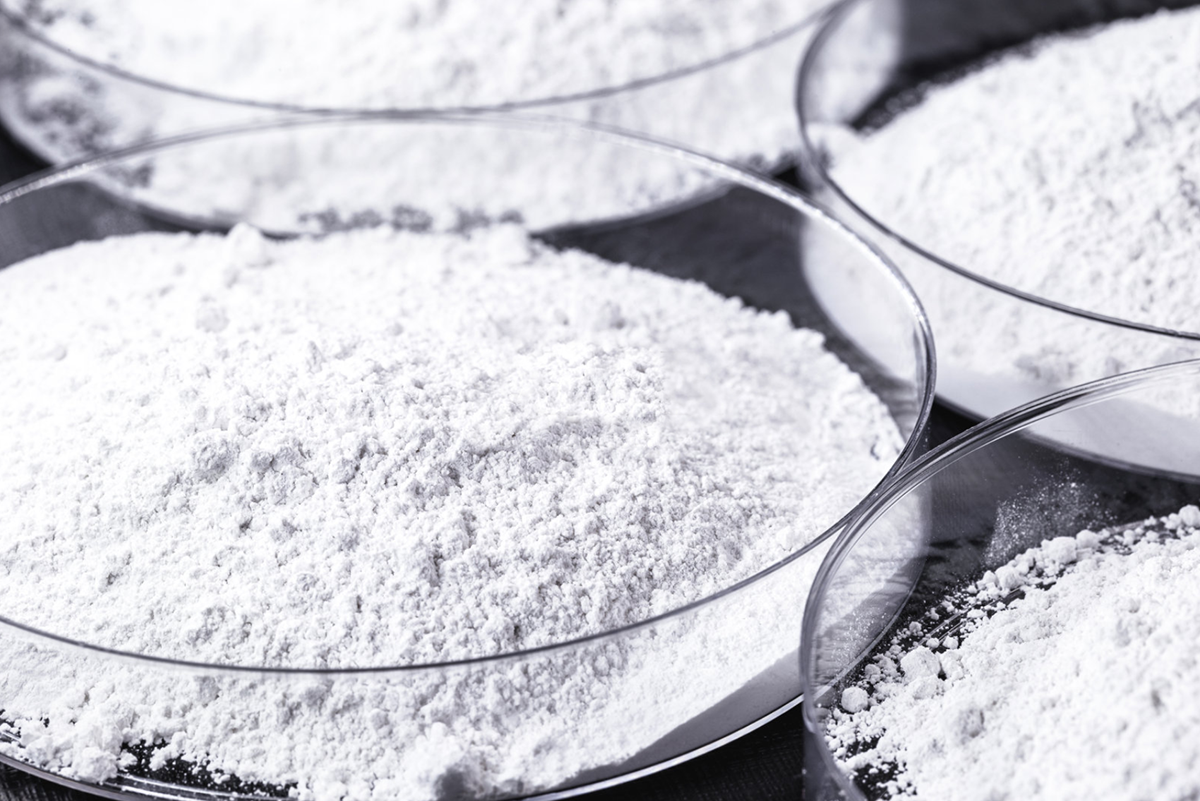
Choosing Between Liquid and Powder PVC Stabilizers
Selecting the right stabilizer for your application requires considering a range of factors, starting with your PVC formulation—whether rigid or flexible. For flexible PVC (with plasticizer content greater than 10%), liquid stabilizers are usually the optimal choice due to their compatibility with plasticizers, which ensures excellent dispersion, and their ability to enhance flexibility and surface quality; common applications here include PVC films, cables, hoses, gaskets, and medical tubing. For rigid PVC (with plasticizer content less than 5% or none), powder stabilizers are preferred, as they do not compromise stiffness and offer superior thermal stability at high processing temperatures, making them suitable for pipes, window profiles, siding, fittings, and electrical enclosures.
Step 1: Define Your PVC Formulation (Rigid vs. Flexible)
This is the most fundamental factor. For flexible PVC, liquid stabilizers are usually the best choice. Their compatibility with plasticizers ensures excellent dispersion, and they enhance flexibility and surface quality. Common applications include PVC films, cables, hoses, gaskets, and medical tubing.
For rigid PVC, powder stabilizers are preferred. They do not compromise stiffness and provide superior thermal stability at high processing temperatures. Applications include pipes, window profiles, siding, fittings, and electrical enclosures.
Step 2: Evaluate Processing Conditions
Consider your processing temperature and speed:
High-temperature processing (>180°C): Powder stabilizers offer better thermal stability at elevated temperatures, making them suitable for rigid PVC extrusion or injection molding.
High-speed production: Liquid stabilizers reduce mixing time and improve processability, making them ideal for fast-paced lines.
Step 3: Prioritize End-Product Requirements
If a smooth, glossy finish is critical—for example, in decorative sheets or medical devices—liquid stabilizers are superior. For mechanical performance, powder stabilizers are better for rigid products needing stiffness and impact resistance, while liquid stabilizers are preferred for flexible products requiring elongation and flexibility. For long-term durability, especially in products exposed to high temperatures or harsh environments like industrial pipes or outdoor siding, powder stabilizers provide better long-term thermal stability. Compliance with safety and environmental regulations is also non-negotiable, as requirements vary by region and application. For food contact or medical applications, opt for non-toxic stabilizers—such as calcium-zinc powder stabilizers or food-grade liquid organotin stabilizers—that meet standards like FDA or EU 10/2011. From an environmental perspective, avoid toxic stabilizers like lead-based powders or certain liquid organotins, which are restricted in many regions; calcium-zinc powder stabilizers are a sustainable alternative.
Step 4: Comply with Safety and Environmental Regulations
Regulatory requirements vary by region and application, so ensure your stabilizer choice meets local standards:
Food contact or medical applications: Look for non-toxic stabilizers (e.g., calcium-zinc powder stabilizers or food-grade liquid organotin stabilizers) that comply with FDA, EU 10/2011, or other relevant standards.
Environmental considerations: Avoid toxic stabilizers (e.g., lead-based powders, certain liquid organotins) that are restricted in many regions. Calcium-zinc powder stabilizers are a sustainable alternative.
Step 5: Analyze Total Cost of Ownership
Calculate mixing time, energy costs, and waste rates for both liquid and powder options, and consider storage and handling costs. For high-volume production, liquid stabilizers may offer lower total costs despite their higher upfront price, while powder stabilizers may be more economical for low-volume, cost-sensitive applications. Real-world case studies further illustrate these selection principles: for flexible PVC medical tubing, which requires a smooth surface, biocompatibility, consistent performance, and high processing speed, a liquid organotin stabilizer is the solution, as it blends seamlessly with plasticizers to ensure uniform stabilization and a defect-free surface, complies with medical regulations like FDA, and enables fast extrusion to meet high-volume production needs. For rigid PVC sewer pipes, which demand stiffness, impact resistance, long-term thermal stability, and cost-effectiveness, a calcium-zinc powder stabilizer is ideal, as it preserves rigidity, provides excellent thermal stability during high-temperature extrusion, is cost-effective for large-volume pipe production, and meets environmental regulations by avoiding toxic additives.
In conclusion, both liquid and powder PVC stabilizers are essential for mitigating PVC degradation, but their distinct characteristics make them better suited for specific applications. When selecting a stabilizer, take a holistic approach: start by defining your PVC formulation and end-product requirements, then evaluate processing conditions, regulatory compliance, and total cost of ownership. By doing so, you can choose a stabilizer that not only protects against PVC degradation but also optimizes production efficiency and end-product performance.
Post time: Jan-26-2026